

Employers and their employees worldwide are currently negotiating new expectations around work.
This goes beyond a push-pull regarding work-from-home arrangements vs. expectations that employees should come into the office at least part of the week.
This is about people feeling as though they have a place within an organization, which in turn trusts and values each person individually. HR executives are designing and refining their employee experiences in this context.
Below, we explore the particular and important role payroll plays in creating these employee experiences.
Payroll’s touchpoints
For employees, payroll creates important touchpoints in the employee experience.
As talent solutions strategist Quincy Valencia says, payroll’s impact on the employee experience cannot be overstated because “it helps ensure employees are paid on time and in full,” she writes. “This builds the most basic level of trust between an employee and their employer.”
And during the very first stages of onboarding, payroll shapes the employee experience. Pay issues, like a missed paycheck, set a poor precedent for a new hire. Repeated mistakes, which are often caused by processes reliant on email and manual data entry, may result in resignations.
Dinesh Anbu, head of HR data analytics and compensation at Zalaris, also cites the need for software to control all payroll processes as crucial in improving the employee experience. Additionally, Anbu stresses the need for adaptability (e.g. when the company grows into a new region and needs to scale up locally compliant payroll systems quickly) and transparency in shaping a great employee experience.
“Companies can achieve more by communicating with their employees and service providers about their payroll experience and concerns,” Anbu writes. “... Not getting paid on time is frustrating, topping that off with a lack of communication can push employees and service providers to look for alternatives.”

Employee self-service portals
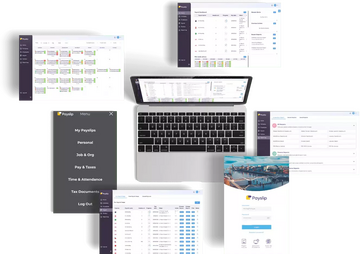
An excellent way to create some of the transparency Anbu writes about is to give employees self-service portals for managing their own payroll-related needs.
An employee self-service portal will ideally have several features, including:
- Giving employees a place to access their payslips, tax information and any other personal information related to payroll.
- Offering access to the wider package of benefits the employer provides.
- Secure access so sensitive personal data isn’t compromised.
“Self-service portals put the power in employees’ hands to handle tasks and access information on their own rather than depending on someone else,” Neocase VP of Sales and Marketing Lila Nazef writes.
“Without an HR web portal, employees must go to the HR department in person or engage in a back-and-forth email or phone conversation to get their questions answered or handle routine processes. With a portal, employees can get the answers they need right away and handle processes on their own time, from their own devices.”
Meeting digital expectations
An employee self-service portal makes more sense when you consider the larger context in which companies build employee experiences today.
In their personal lives, people have instant access to so many things — their banks, their favorite films, the number of steps they’ve walked in a given day. Employees, reasonably, should expect to have access to something as basic as a payslip.
If instead they have to submit a request ticket to HR or payroll and wait several days for a response, the company’s efforts to create a superior employee experience are undermined.
Employees are accustomed to always-on, easy-to-use digital tools, like a banking app or streaming entertainment, in their personal lives. They bring similar expectations for ease, accessibility and efficiency to the technology they use at work.
It’s up to employers, then, to ensure their staff can look up payroll information or check their time-off balances whenever those employees need that information. “Providing instant access to this information is a simple way to keep people satisfied while also saving your company time and money,” Nazef says.
Some companies are already taking another leap forward by integrating AI-powered chatbots in their employee self-service portals. In March 2023, EY announced it was building “an enterprise-ready payroll chatbot to answer complex questions from employees.”
Soon, employee self-service portals will be able to provide actual consultancy services to help people navigate questions such as how a relocation or a mortgage would impact the amount of taxes withheld from their paychecks.
In the world that’s arriving imminently, organizations that don’t have total control over their payroll data will struggle to maintain a resonant employee experience.

Unified data, unified experiences
But before most companies can begin to imagine GPT-enabled employee portals, they need to unify their employee experiences across teams and countries.
From our experience, most companies today don’t create that unified experience. Access to data for an employee in Kuala Lumpur might not be the same as it is for an employee in London, for example.
Start with your payroll data to remedy this fragmented touchpoint in the employee experience. Our Employee Self-Service portal can ingest data from two places, either the Payslip portal itself or an HCM such as Workday. Once you are working with the same data for everyone across the organization, you can make self-service a uniform experience for employees everywhere.
Your employees can be partners in this effort. From the self-service portal, they can verify data and flag errors for HR. “Collecting, monitoring, and updating employee data is an important job,” HR professional Gemma Hart writes.
“However, when carried out manually, it is a process that can easily succumb to human error. Employee self service is a great way to reduce the likelihood of such problems as all information is entered, stored, and updated digitally.”
From there, Gartner has a helpful rubric for assessing a self-service portal as an element of a larger employee experience. That rubric has three points:
- Clarity. Does the content demonstrate a successive series of steps? Can employees understand the process of resolving a question?
- Credibility. Does the content encourage the employee by indicating how it has been helpful to other people with similar questions? Is it conversational and not full of jargon?
- Confirmation. Does the content indicate whenever a question is resolved? Does the content indicate whether a future action will be taken on behalf of the employee, or that no further action is necessary?
When your employee self-service portal is accomplishing this for people throughout the company, whatever country they’re in, then you’ve leveraged payroll to create a meaningful, helpful part of the employee experience.
Learn more
An engaged employee is someone who brings speed, enthusiasm and results to their day-to-day work. By building an impactful employee experience, organizations nurture those qualities across all of their teams.
And by giving employees a place to access their payroll data whenever, wherever they need it, payroll can create a vital touchpoint for that employee experience.
To see how global payroll control and employee self-service can boost your own employees’ experience, book a tour of our platform today.