

Growing your global teams presents numerous challenges for finance executives: Should you accelerate growth? Can you sustain your pace of growth? Which markets make the most business sense to target?
Compliance becomes a major hurdle early on in the process of international expansion. Compliance is a relatively fixed obligation too. There isn’t room to negotiate whether you will ensure your company complies with tax laws, labor laws, etc. of each country in which you do business.
What CFOs must do is identify efficiencies in managing and maintaining that compliance. With global payroll, this is a particularly complex task for a variety of reasons:
- Global teams today feature a mix of on-premises and remote workers.
- Labor laws and tax regimes around the world are always evolving.
- Companies of nearly all sizes have the tools and means to hire globally today. This ratchets up competitive and regulatory pressure for everyone.
CFOs who take the time to understand the mechanics of global payroll will have a much better idea of how this core business process can align with their goals for growth.
Here are three things CFOs should pay attention to when considering payroll compliance for their global teams.
Unlocking data-driven decision making across your global teams
As the team at Oracle points out, CFOs today have responsibilities beyond pure financial leadership. They’re expected to open pathways for new business, facilitate strategic planning, and shepherd companies through phases of growth.
This is only possible when CFOs have access to data from across the organization to inform their decision-making.
A common stumbling block we see in companies is they still treat payroll as a siloed process. It lives outside of the purview of HR and finance and is largely unintelligible to either. When companies expand internationally, that dynamic only entrenches because global payroll gets complex quickly.
This is untenable because payroll is too important to a company’s growth. Growing internationally means ensuring compliance with labor laws, tax laws, payments across currencies, and synching with fiscal calendars and payment cycles.
So, unlocking growth means bringing global payroll data out of its silo and into the company’s networks of data, analytics and digital processes. After all, CFOs can only make informed decisions when they have access to fast, agile cloud analytics capabilities, writes Laurie Miles, senior director at SAS UK & Ireland.
But this creates exposure to another layer of compliance issues: data privacy regulations. Different countries have different rules about how their citizens’ private data can be stored and used. This is why it’s helpful for global payroll to have a compliance dashboard for monitoring these issues at a glance, business coach Robin Waite writes.
“They can track a variety of metrics, such as payroll errors, tax filing status, and overtime management,” Waite says. “Dashboards also generate alerts when potential issues arise, giving businesses the chance to address problems before they escalate.”
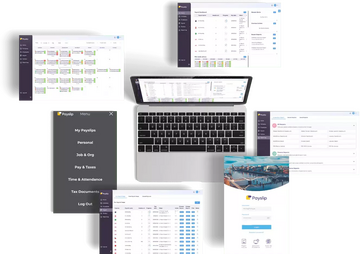
In our company, we talk about global payroll control to describe the technology and framework for operating at this level. Because a global payroll system relies on multiple in-country providers to process payroll and remain compliant, clarity and control are crucial to your global payroll manager. Within a global payroll control model, that person would have:
- Full visibility into compliance calendars so they can monitor obligations across all jurisdictions at once.
- Data that is always date-stamped and ready for auditing.
- Standardized data and processes so payroll can remain locally compliant but globally intelligible for your analytics tools.

Automating processes to guarantee compliance
Compliance can appear expensive and unwieldy at this scale, but it doesn’t have to be. Automating aspects of the payroll process — e.g. pre-payroll data input, reconciliation and reporting — can create massive efficiencies across the payroll team.
“A trustworthy and reliable automated payroll system will regularly update the system according to active payroll laws and equally keep businesses updated on tax allocation rules, latest tax law changes, and government tax guidelines,” the team at Dubai-based HCM services provider BSH writes. “This way businesses can be confident that their tax compliances are in line with the most recent updates.”
At the same time, automation eliminates manual work and the errors it can create. “One of the most significant benefits of payroll automation is the reduction of errors in the payroll process,” the team at Pop! Automation writes. “In fact, errors in payroll can be costly for businesses, leading to fines, penalties, employee distrust, and even legal issues.”
Ensuring your payroll processes have the right data for each member of your global teams, and that they perform the right calculations each time, goes a long way to maintaining compliance and keeping those associated costs under control.

Payroll continuity: Ensuring global teams get paid on time
An important aspect of payroll compliance everywhere in the world is continuity. There are steep penalties for failing to get accurate payments out to your global teams on time.
As a business process, global payroll is not without risk. Finance executives know this better than anyone. The collapse of Silicon Valley Bank in March 2023 showed the world how vulnerable a company’s treasury can be, and therefore how prone businesses are to payroll disruption if they don’t manage their cash properly.
In 2022, HR software provider MHR Global surveyed leaders of mid-sized businesses in the UK and Ireland and found that more than 3 in 10 companies “rate their ability to withstand non-routine disruptive events as less than good.” These are the kinds of companies that could experience payroll continuity disruption in the event of a crisis, and that vulnerability could cost them significant money in fines from jurisdictions around the world if they fail to pay their teams on time.
And at the risk of putting too fine a point on this, payroll continuity is a major part of the employee experience. If paychecks fail to arrive on time or in the correct amount, your employees will begin to look elsewhere for work. No amount of financial planning can offset the costs of rapid staff turnover.
That’s why the finance department and the global payroll team need to operate in lock-step to ensure the company’s treasuries can always pay employee salaries. Dropping the ball just once exposes the organization to steep fines and other consequent financial impacts.
Learn more
When the COVID-19 pandemic hit in 2020, the payroll team at GoTo Technologies Group was using Payslip to manage payrolls across 13 different in-country vendors.
As governments began to announce shelter-in-place orders and companies rolled out work-from-home options, payroll continuity became a pressing concern for many companies.
Not GoTo. “When the global COVID-19 pandemic arose, it was not an issue from a payroll perspective and critically getting everyone paid,” Global Payroll Director Colin Smith says. “The Payslip platform enabled fast and seamless continuity for our international payroll service.”
To see how our global payroll control platform can help your organization navigate payroll compliance, book a demo today.
Images used under license from Shutterstock.com.