

Payroll has always been a business-critical process, but it’s seldom thought of as a process that helps facilitate a company’s growth.
In this article, we’ll make the case that payroll and payroll data can indeed help an organization expand — if the right tools are in place.
Payroll automation fixes hectic, just-in-time pay cycles
Manual payroll processes are still the norm in many enterprises, and these consume most of those payroll teams’ time.
When payroll relies on manual entry, payroll professionals end up firefighting and doing everything they can to keep their heads above water. Payments go out at the end of the cycle, everyone takes a quick breath, then it starts all over again.
With their time so consumed, payroll managers have no time for strategic thinking or reporting. And so payroll remains a burden rather than a driver of value.
Payroll automation is what solves this problem.
By automating repeating tasks, payroll technology can process payroll calculations more quickly and with much less manual input. This makes for a faster, more efficient payroll process, and it also makes for a safer process in which sensitive employee data is much less likely to be compromised or subject to human error.
By automating payroll, companies do the following:
- They make room for strategy, reporting and analytics.
- They create a safer environment for sensitive employee data.
- They generate cleaner payroll data.
- They help ensure their payroll processes are compliant with evolving regulations, whether in the markets where they already have a footprint or in future expansion markets.

Global control ensures payroll keeps pace with company growth
Payroll doesn’t scale the way other business functions scale.
Because of local labor rules, tax regimes and compliance requirements, among other challenges, most organizations find it makes the most business sense to rely on in-country providers for payroll processing. And as EY reported in 2020, many of those organizations rely on multiple vendors to power their payroll. They then try to standardize processes and ensure there is strong governance to manage those vendor relationships.
Again, here is where manual processes will cause bottlenecks. Imagine an organization that has plans to expand into five new markets within the year and hire hundreds of new employees. If payroll isn’t automated, or even if it is but vendor governance is weak or opaque, then payroll will act as a blocker to those plans.
It takes the right technology to turn payroll from a blocker to a facilitator. Organizations that invest in a global payroll control platform do this by making their payroll processes more transparent, more efficient and more agile.
Dave Wallis, director of analytics and information strategy at Insperity, has a good example of this in an interview with Visier. Wallis notes that when a company’s people analytics tools have access to global payroll data, they can start making more deeply informed decisions about how they will grow.
“When a company can map their payroll dollars to projects, product lines or G/L accounts, they can clearly see how the supporting workforce costs impact the profitability of those accounts,” Wallis says. “And based on that assessment, they can better determine whether it makes sense to expand the workforce associated with that account, or to invest them in other areas of the company’s business.”
Payroll data can drive new market entry and workforce deployment
Following on Wallis’ point above, payroll data is also useful in helping executives make decisions about which markets to enter or where they should prioritize their hiring.
Payroll data can tell many stories when it is standardized, consolidated and liberated via smart reporting and analytics tools.
Here is an example of how this could work: The organization’s CFO and CTO, who are collaborating on the expansion strategy, would go to the global payroll manager and ask for a report on labor costs for each country. With this information, the two executives would have a better idea of where workforce expansion could be most cost-effective.
From there, they could partner with HR to develop a growth strategy that defines where the best talent can be found; what the company can do to attract those folks; and what mix of full-time, part-time and contingent employment makes the most sense within those cost boundaries.

Automated payroll can facilitate new staff onboarding
More people means more systems and more compliance.
Most organizations have learned the hard way what that complexity does to an employee onboarding process. This is why we frequently recommend organizations digitize payroll and HR at the same time. When these business-critical functions collaborate on the ways they can use technology to untangle the complexities of growth, they lay the groundwork for smoother future expansion.
“Organizing payroll and paying people locally is a royal pain,” says HR Future, which recommends either using an employer-of-record model or working with in-country payroll providers when hiring abroad.
“This will ensure that the necessary tax records are produced correctly, submitted on time, and it avoids any difficulties with international bank transfers being delayed too. Even when remotely dealing with freelancers instead of employing local people, find solutions to get payroll processed locally. It avoids so many problems for all parties that way.”
Learn more
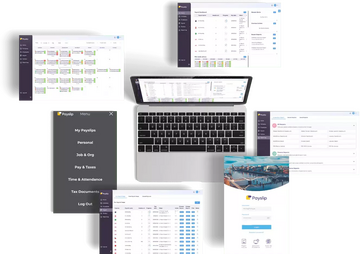
To see how a global payroll control platform can streamline payroll processing and give your organization the agility it needs to expand into new markets, book a tour of the Payslip platform today.
mages used under license from Shutterstock.com.