

Global payroll risk rarely comes from one dramatic failure. More often, it builds quietly through small gaps in the payroll process: an incorrect input, a missed deadline, an unexpected variance, a manual file change, a late response from a provider or an approval that is difficult to trace later.
Multiply those risks across countries, payrolls, systems and providers, and maintaining control becomes considerably more difficult.
This is why global payroll controls matter.
For multinational organizations, effective payroll control is about creating a structured, repeatable way to prevent errors, identify exceptions, assign accountability and maintain evidence throughout the payroll cycle. The objective is not to add more administration to payroll. Good controls should make payroll easier to manage.
So what does an effective global payroll control framework look like?
What are global payroll controls?
Global payroll controls are the processes, checks, approvals and governance mechanisms used to reduce risk and maintain accurate, consistent and accountable payroll operations across multiple countries.
They can include controls around payroll inputs, data validation, workflows, deadlines, provider performance, Gross-to-Net calculations, payroll reconciliation, approvals, employee documents, financial outputs and audit records.
For a multinational organization, there is an additional challenge. Controls need to work consistently at global level while still accommodating local country requirements.
That makes standardization particularly important.
If every country follows a completely different process, it becomes much harder for a global payroll leader to understand whether the appropriate controls have been completed, where exceptions exist and where risk is developing.
The aim should be a consistent global control framework with the flexibility to handle what is genuinely different locally.
Why are global payroll controls important?
Payroll sits at the intersection of several types of business risk.
There is financial risk when employees are overpaid or underpaid, payroll costs are incorrectly recorded or errors create unnecessary rework.
There is operational risk when payroll depends on manual processes, individuals, spreadsheets or disconnected systems.
There is compliance risk when payroll processes fail to meet applicable local requirements.
There is data risk when sensitive payroll information is moved or handled without appropriate controls.
And there is employee risk because payroll errors affect something very personal: people's pay.
Strong payroll controls reduce exposure by creating checks and accountability throughout the process rather than relying on a final review to catch everything at the end.
For global payroll leaders, the question should therefore be less about whether controls exist and more about whether they operate consistently across every payroll.
A practical global payroll control framework
An effective framework should follow the payroll cycle itself. That makes it easier to understand where risk enters the process and where controls should be applied.
Here are eight areas global payroll teams should examine.
1. Control payroll inputs before processing begins
Payroll accuracy depends heavily on the quality of the information entering the process.
Employee changes, joiners and leavers, time and attendance, variable compensation, bonuses, benefits and other payroll inputs may come from several systems or teams. When information arrives through different channels and formats, errors can enter payroll before processing has even started.
Input controls should establish what information is required, where it comes from, when it is due and who is responsible for providing and approving it.
Payroll teams should also have visibility over whether all required inputs have arrived before payroll moves to the next stage.
The principle is simple: prevent bad or incomplete data from progressing further into the pay cycle.
2. Validate payroll data automatically wherever possible
Receiving the data is only the first step. Payroll teams also need confidence that it is complete and correctly formatted.
Manual checking becomes increasingly difficult as employee populations and country counts grow. It also creates a dependency on people noticing an error among potentially thousands of data points.
Automated validation provides an important control by checking data against predefined rules as it enters or moves through the payroll process.
Rather than manually inspecting everything, payroll professionals can focus on the exceptions identified by the validation process.
This does not remove human oversight. It makes human oversight more targeted.
3. Create clear workflows, ownership and deadlines
A well-controlled payroll should make it obvious what needs to happen next, who needs to do it and when it needs to be completed.
This sounds straightforward, but global payroll processes often involve many stakeholders: internal payroll teams, HR, Finance, managers and external payroll providers.
If responsibilities are managed through email, spreadsheets or individual knowledge, it can become difficult to see the status of a payroll or identify where something is late.
A standardized digital workflow creates a clearer control environment. Actions can be assigned to owners, due dates can be tracked and overdue activities can be escalated.
This also improves business continuity. If a key team member is unexpectedly unavailable, the payroll process should not disappear with them. Another authorized team member should be able to see the status of the payroll and understand what needs to happen next.
4. Apply controls to payroll provider management
Many multinational organizations work successfully with multiple in-country payroll providers. Local expertise is valuable, particularly when payroll needs to reflect country-specific requirements and practices.
The control challenge is making sure those providers operate within a consistent global framework.
Payroll teams need visibility into whether files were delivered on time, how many versions of payroll calculations were required, where reversions occurred and whether agreed service levels are being met.
Without that visibility, provider management can become largely relationship-based. Teams may know that a particular payroll regularly feels difficult without having the data to understand exactly why.
A stronger control framework allows organizations to retain the local providers that work best for them while measuring and managing performance consistently across the global operation.
5. Control Gross-to-Net calculations before approval
The return of Gross-to-Net calculations from a payroll provider is a critical point in the pay cycle.
Payroll teams need to establish whether the calculations are complete and whether the resulting payroll is consistent with the approved inputs.
This is another area where automated validation can strengthen payroll controls. Checks can be applied as Gross-to-Net data arrives, with discrepancies highlighted for review before the payroll progresses.
If a payroll calculation needs to be corrected, each version should also be retained so that the organization has a clear record of what changed.
The goal is to identify issues before approval rather than discovering them after employees have been paid.
6. Reconcile payroll and investigate variances
Not every payroll variance is an error.
A salary may increase because of a promotion. A bonus may create a significant month-on-month change. Headcount may have increased. An employee may have left.
The control is not simply detecting that something changed. It is determining whether the change is expected and explainable.
Payroll reconciliation should therefore compare relevant versions and periods to identify discrepancies and variances that need investigation.
Automation can perform much of the initial comparison, allowing payroll professionals to concentrate on understanding and explaining exceptions.
This is an important shift. The payroll team spends less time finding differences and more time deciding whether those differences are correct.
7. Build approval and authorization into the process
Payroll approval should be a formal control rather than an informal confirmation.
Before a payroll is finalized, the organization should be able to demonstrate who reviewed it, who authorized it and when those actions took place.
Clear separation of responsibilities is also important. The person preparing or reviewing payroll information should not necessarily be the only person able to authorize the final payroll.
For global organizations, standardized approval processes make it easier to apply consistent governance across countries while accommodating the appropriate local responsibilities.
Most importantly, approvals should leave a traceable record.
If an auditor asks who approved a payroll six months later, the answer should not depend on searching through an inbox.
8. Maintain controls after payroll is approved
Payroll risk does not disappear when the payroll calculations are authorized.
Employee payslips need to be correct and distributed securely. Payroll information needs to reach Finance. General Ledger outputs need to be accurate. Reports and payroll documentation need to remain accessible for review and audit.
Post-payroll controls should therefore cover employee documents, financial outputs, reporting and document retention.
For example, payslips can be validated before they are released to employees, while General Ledger information can be checked before it moves into Finance processes.
A complete control framework follows payroll from the first input through to the final downstream output.
What makes a good global payroll control?
The strongest controls tend to share a few characteristics.
They are preventative where possible, stopping an error before it moves further into payroll.
They are automated where appropriate, particularly when checking large amounts of structured payroll data.
They are visible, so payroll leaders can see whether an action or control has been completed.
They are accountable, with clear ownership and authorization.
They are consistent globally, while allowing for legitimate country-level differences.
And they are traceable, creating the records required to understand what happened later.
This last point is particularly important for audit readiness.
Audit readiness should not mean assembling evidence when an audit begins. Ideally, the evidence is created automatically as payroll is processed.
Global payroll controls vs. payroll compliance: what is the difference?
The two concepts are closely related, but they are not identical.
Payroll compliance is about meeting the legal, regulatory and statutory requirements that apply to payroll. Payroll controls are the operational mechanisms that help an organization run payroll accurately, consistently and accountably.
A strong control environment can support compliance by making processes more consistent and traceable, but controls also address risks beyond regulatory compliance.
A missed internal approval, unexplained variance or late provider file may not automatically constitute a compliance breach. Each can still represent a significant payroll control weakness.
For global payroll leaders, it is useful to think about both.
Compliance asks: Are we meeting our obligations?
Control asks: Can we demonstrate that the payroll process is operating as intended?
How do you assess your current global payroll controls?
A useful control assessment does not need to begin with a complex project.
Start with one payroll cycle and map the process from beginning to end.
For each stage, identify what could go wrong, what control currently exists to prevent or detect the issue, who owns that control and what evidence is created when it is completed.
Then repeat the exercise across countries.
This often reveals where the real problem lies. An organization may have strong controls within individual countries but very little consistency at global level.
Questions worth asking include:
- Can we see the status of every payroll from one place?
- Are responsibilities and deadlines clearly assigned?
- Is incoming payroll data automatically validated?
- Can we identify missing or incorrect data before calculations begin?
- Can we measure payroll provider performance consistently?
- Are Gross-to-Net results validated before approval?
- Can we automatically identify payroll variances?
- Are approvals formally recorded?
- Are employee documents validated before release?
- Can Payroll and Finance access reliable payroll reporting?
- Is the evidence required for audit already available?
The more of these controls that depend on spreadsheets, email or individual knowledge, the greater the opportunity to strengthen the global control environment.
Technology should make payroll controls easier, not create more administration
There is an important balance to strike.
Adding more manual checklists does not necessarily create better control. In fact, excessive manual controls can slow payroll down while still leaving organizations exposed to human error.
Technology can make controls part of the payroll process itself.
Data can be validated when it arrives. Deadlines can trigger alerts. Payroll versions can be retained automatically. Variances can be identified without manual comparison. Approvals can be recorded as part of the workflow. Reports and documents can remain available for audit.
This creates a very different operating model from one in which payroll professionals have to prove manually, after the event, that every control took place.
How Payslip strengthens global payroll control
Payslip transforms global payroll through Payroll Control, Integration and AI Automation.
At the center is Payslip Control, the Global Payroll Control Platform.
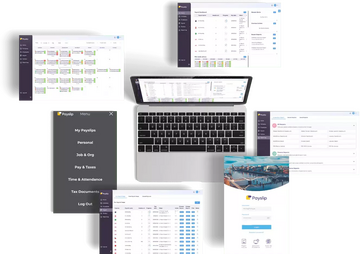
Payslip Control provides eight core features: Digital Workflows, Calendars & Alerts, Reporting & Analytics, Vendor Management, Automated Validations, Variance Analysis, Smart Reconciliations and Document Management.
Together, these capabilities enable organizations to create a standardized approach to global payroll while maintaining the local flexibility required across countries.
Digital Workflows and Calendars & Alerts provide visibility over payroll actions, ownership and timelines. Vendor Management supports collaboration with in-country payroll providers and enables organizations to monitor provider performance. Automated Validations check payroll data throughout the process, while Variance Analysis and Smart Reconciliations help teams identify and investigate differences before payroll approval.
Reporting & Analytics gives Payroll, HR, Finance and other stakeholders access to global and local payroll information, while Document Management keeps payroll documentation secure, accessible and available to support audit readiness.
Payslip Connect can automate the flow of payroll data and documents between Payslip Control and the wider payroll ecosystem, reducing the manual handoffs that can introduce additional risk.
The objective is not to create more controls for payroll teams to manage. It is to make control part of the way global payroll operates every day.
From payroll checks to global payroll control
Most payroll teams already have controls. The question is whether those controls are consistent, visible and scalable across the global operation.
As organizations grow, relying on spreadsheets, inboxes and individual knowledge becomes increasingly difficult. More countries and more payroll providers should not have to mean less control.
A strong global payroll control framework creates a common operating model while preserving the local expertise required to run payroll successfully in each country.
It helps teams prevent errors earlier, identify exceptions faster, understand provider performance, strengthen accountability and maintain an audit-ready record of payroll activity.
Ultimately, global payroll control is about confidence: confidence that the right data entered the process, the right checks took place, the right people approved the payroll and the organization can demonstrate what happened at every stage.
Want to strengthen control across your global payroll operations? Reach out to the Payslip team to learn how the Global Payroll Control Platform can help you standardize processes, reduce payroll risk and maintain greater visibility across every country and payroll provider.