Global payroll analytics can help multinational organizations move beyond routine reporting to uncover payroll trends, understand workforce costs and make better-informed business decisions.
Global payroll generates a significant amount of valuable business information every month.
Employee compensation, employer costs, taxes, benefits, headcount changes and payroll variances all contribute to a detailed picture of an organization's workforce and financial commitments.
Yet having access to payroll data does not automatically mean having access to useful insights.
For many multinational organizations, payroll information is spread across countries, systems, reports and in-country payroll providers. Different reporting formats and inconsistent pay element definitions can make it difficult to build a clear global picture.
The result? Payroll teams spend valuable time collecting, consolidating and interpreting information instead of using it to support business decisions.
The question for global payroll leaders is no longer simply whether they have the data.
It is whether they can turn that data into actionable insights quickly enough to make a difference.
What is global payroll analytics?
Global payroll analytics is the process of analyzing payroll information across countries, business entities and pay periods to identify trends, understand costs, investigate variances and support informed decisions.
It goes beyond producing routine payroll reports.
While traditional payroll reporting shows what happened during a payroll cycle, payroll analytics helps organizations understand why something happened, how it compares with previous periods and what may require attention.
For example, payroll analytics can help answer questions such as:
- Why have payroll costs increased in a particular country?
- Which departments are experiencing the largest changes in compensation?
- How do employer costs compare across different markets?
- Are unexpected payroll variances recurring?
- What trends are emerging in headcount, overtime or employee benefits?
These insights can benefit Payroll, Finance, HR and senior leadership, helping transform payroll information into a valuable resource for operational and strategic planning.
Why is global payroll reporting so challenging?
For organizations operating across multiple countries, payroll reporting is rarely straightforward.
Each country has its own payroll requirements, statutory deductions, currencies and compensation structures.
Organizations may also work with multiple in-country payroll providers, which is often the most effective way to access local expertise and ensure high-quality service.
However, differences in how payroll information is structured and reported can make consolidated analysis difficult.
Inconsistent payroll data
A compensation element may be classified differently from one country to another.
Without consistent definitions, comparing payroll costs across markets becomes challenging.
Manual reporting processes
Payroll professionals may need to request files, consolidate spreadsheets, reconcile information and manually prepare reports for Finance or HR.
These activities consume time that could otherwise be spent investigating trends or supporting decisions.
Limited visibility across countries
Individual country reports may provide useful local information but fail to give global payroll leaders a consolidated view of workforce costs and payroll performance.
Difficulty accessing historical insights
Understanding payroll trends requires reliable comparisons across pay periods.
When historical information is difficult to access or analyze, identifying recurring issues and cost movements becomes more complicated.
These challenges highlight the importance of standardized payroll information and consistent global reporting processes.
Five ways global payroll analytics supports better business decisions
1. Understand global payroll costs
Payroll is one of the largest recurring expenses for many multinational organizations.
Understanding how these costs are distributed across countries, departments and employee groups is essential for effective financial management.
Global payroll analytics can help organizations compare salary expenses, employer taxes, benefits and other employment costs.
For example, Finance teams may want to understand why total employment costs increased in one country while headcount remained unchanged.
With access to detailed payroll reporting, they can investigate whether the change relates to bonuses, overtime, statutory contributions or other pay elements.
This provides a stronger foundation for budgeting, cost management and financial planning.
2. Identify payroll trends before they become bigger issues
Individual payroll reports provide a snapshot of a particular period.
Analyzing information across multiple pay periods reveals patterns that may otherwise go unnoticed.
These could include recurring increases in overtime, changes in bonus payments or unexpected movements in particular pay elements.
Trend analysis also helps payroll teams distinguish between expected fluctuations and unusual activity requiring further investigation.
The earlier these patterns are identified, the more time organizations have to understand their causes and determine appropriate actions.
3. Improve payroll accuracy through variance analysis
Payroll variances are not necessarily errors.
Changes in compensation, employee circumstances, benefits and deductions can all create legitimate differences between pay periods.
However, unexpected or unexplained variances deserve attention.
Analyzing payroll data across periods helps teams identify unusual movements and investigate their causes.
For example, a significant increase in net pay may be linked to a legitimate bonus payment, but it could also indicate an input or calculation issue.
Effective variance analysis helps payroll professionals focus their attention on exceptions rather than manually reviewing every transaction.
This can strengthen payroll controls and support more efficient review processes.
4. Give Finance and HR more useful workforce insights
Payroll information is valuable beyond the payroll department.
Finance teams need reliable data to understand employment costs, prepare budgets and support financial reporting.
HR teams can use payroll insights to examine compensation trends, employee benefits, headcount changes and workforce costs.
Senior leaders may need a consolidated view of payroll expenditure across countries and business units.
When these stakeholders can access relevant, consistent reports, payroll becomes a more effective contributor to organizational decision-making.
The objective is not simply to produce more reports.
It is to provide the right information to the right people when they need it.
5. Reduce time spent preparing reports
One of the biggest opportunities in global payroll reporting is reducing repetitive manual work.
Payroll teams frequently spend time gathering data, applying filters, creating spreadsheets and preparing recurring reports.
Standardized reporting tools and automated report scheduling can reduce this administrative burden.
Instead of repeatedly rebuilding reports, teams can spend more time interpreting results, investigating exceptions and providing meaningful insights to stakeholders.
This changes the role of payroll reporting from a recurring administrative task into a more valuable business activity.
Which global payroll metrics should organizations monitor?
The most useful payroll metrics depend on the organization's structure, priorities and reporting requirements.
However, several categories provide a strong starting point.
| Payroll metric | What it helps organizations understand |
|---|---|
| Total payroll cost by country | How employment costs vary across markets |
| Employer costs by pay element | Which salary, tax and benefit components contribute to expenditure |
| Headcount changes | How joiners, leavers and workforce movements affect payroll |
| Overtime costs | Where additional working hours are increasing expenses |
| Payroll variances | Which unexpected changes require investigation |
| Compensation trends | How salary, bonus and allowance payments change over time |
| Payroll process performance | Where delays or operational inefficiencies occur |
The real value comes from examining these metrics consistently across countries and pay periods.
For example, an increase in payroll costs becomes more meaningful when analyzed alongside headcount movements, compensation changes and employer contributions.
How can AI improve payroll analytics?
Artificial intelligence is creating new opportunities for payroll professionals to analyze information more efficiently.
Traditionally, investigating a payroll question might involve selecting reports, exporting files, applying filters and comparing multiple data sets.
AI-assisted analysis can simplify parts of this process by allowing users to ask questions in natural language.
For example:
- "Did any employees' net pay increase compared with last month?"
- "Which departments had the highest salary growth over the last three pay periods?"
- "Are any new joiners missing salary information?"
- "Which employees received bonuses above a specified percentage of base salary?"
Rather than spending time manually searching through information, payroll professionals can use AI-assisted tools to identify relevant findings more quickly.
Importantly, AI should support professional judgment rather than replace it.
Payroll teams remain responsible for reviewing results, understanding the context and deciding whether action is required.
How Payslip helps turn payroll data into actionable insights
Payslip helps multinational organizations strengthen global payroll management through standardized processes, reporting, and automation.
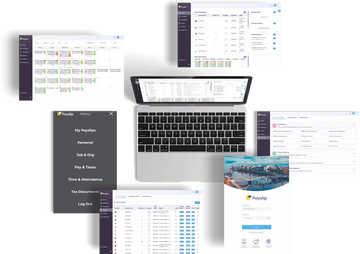
Payslip Control, the Global Payroll Control Platform, includes Reporting & Analytics, enabling organizations to gain meaningful insights from payroll information across countries, companies, and pay periods.
Payslip Control offers more than 50 out-of-the-box reports for Payroll, HR, Finance, and senior leadership. These reports provide immediate access to key payroll metrics and can be customized by users to meet their specific reporting needs.
Organizations can analyze payroll information by country, region, employee, or pay element, making it easier to understand workforce costs and identify relevant trends.
Reports can also be scheduled to run automatically, reducing the manual effort involved in recurring reporting activities.
For more advanced reporting requirements, the Report Designer enables users to create their own custom reports based on specific payroll metrics, organizational structures, and business priorities.
Explore payroll information with PayrunIQ, Payslip's AI Agent
Payslip also offers PayrunIQ, an AI-powered payroll analysis agent within Payslip Alpha Intelligence, designed to help payroll professionals investigate payrun information using natural-language questions.
Instead of manually searching through reports and comparing data, authorized users can interact with the PayrunIQ AI Agent to analyze the active payrun and the previous two pay periods, identifying anomalies, variances, and trends.
For example, a payroll professional can ask whether employees have received unusually large bonuses or whether required information is missing from a payrun.
By using AI to analyze payroll data and surface relevant insights, PayrunIQ helps reduce manual investigation and enables payroll teams to identify potential issues more efficiently, while keeping payroll professionals in control of reviewing findings and making decisions.
Together, Reporting & Analytics and the PayrunIQ AI Agent help organizations move beyond traditional reporting, turning payroll data into actionable insights faster and with less manual effort.
Frequently asked questions about global payroll analytics
Payroll reporting presents information about payroll activity, such as employee payments, employer costs and deductions.
Payroll analytics examines that information to identify trends, explain changes, compare periods and support business decisions.
Both are important, but analytics adds context and interpretation to the information provided by reports.
Standardization helps multinational organizations compare payroll information consistently across countries, even when local payroll requirements and providers differ.
Consistent definitions and reporting structures make it easier to analyze workforce costs, investigate variances and produce meaningful global reports.
Payroll analytics helps Finance teams understand employment costs, compare expenditure across countries, investigate unexpected changes and support budgeting and financial planning.
Yes. Payroll analytics can help identify unusual payments, missing information, recurring variances and unexpected changes between pay periods.
These findings support investigation and stronger payroll controls, although professional review remains essential.
Yes. Organizations can continue working with their preferred in-country payroll providers while adopting standardized global processes and reporting practices.
This approach preserves valuable local expertise while improving the consistency and visibility of payroll information.
AI-assisted tools can help payroll professionals investigate data using natural-language questions, identify patterns and reduce manual analysis.
The findings should still be reviewed by payroll professionals who understand the relevant business and payroll context.
Better payroll decisions start with better insights
Global payroll is much more than a monthly payment process.
It contains valuable information about workforce costs, compensation, organizational change and operational performance.
Yet that information only creates business value when it can be accessed, understood and acted upon.
For multinational organizations, the opportunity is to move beyond fragmented reports and manual analysis toward a more consistent, insight-driven approach.
By improving payroll reporting, standardizing information and using intelligent tools to investigate trends and exceptions, organizations can give Payroll, Finance and HR greater confidence in the decisions they make.
The goal is not more payroll data. It is better understanding of the data you already have.
Discover how Payslip Control helps multinational organizations gain greater visibility into global payroll operations and turn payroll information into actionable business insights.