

Global payroll managers already had a difficult job before the pandemic, before whole workforces began to work remotely.
Cascading effects from 2020 have made payroll management much more complex, however. Remote and hybrid employees create new tax and compliance burdens, for example. Further, new pushes for pay transparency and early access to earned wages have revealed that old approaches to payroll are insufficient for global companies today.
Global payroll managers everywhere are struggling to gain visibility and control over payroll data and payroll processes in this environment.
If you feel as though your own organization’s payroll has become overwhelmingly complex, you’re not alone.
Below are three drivers of that complexity.
The knock-on effects of working from home (or abroad)
Many workers appreciate having the option to work from home, even if for a few days per week. Time’s Jose Maria Barrero, Nick Bloom and Steven J. Davis report that the workers they’ve surveyed, on average, value two or three days of working from home as being worth 8 percent of their pay.
Whether a person works from a home office, a cafe or on-site doesn’t affect payroll, per se. But if that employee lives in a different city, county, state or country then the company’s offices, that triggers a series of decisions.
For one, employers might look to adjust a person’s pay to account for relative changes in that person’s cost of living. Or, as Higharc Director of Recruiting Brittney Hancock tells Forbes, employers may hold off on giving raises to employees who move from high-cost-of-living to lower-cost-of-living zones.
For payroll teams, that geographical difference could mean new tax burdens and other compliance matters. This is the case inside of the United States. “Every US state has different definitions of residency, and there are things to consider like worker's compensation insurance and other state-specific tax regulations,” says Annie Morin, people and administrative services manager at Vascular Wellness in North Carolina.
“In the coming decade, it will be interesting to see if and how states adjust their laws to account for the ‘Movement for Movement.’”
An even bigger challenge is handling payroll for remote employees who move across national borders. Workers who plan to take advantage of Spain’s new digital nomad visa, for example, will gain the legal right to work from sunny cities like Malaga or Barcelona. But if someone spends 183 days per year in Spain, they will become tax residents there, writes the team at Balcells Group, which provides legal services in Spain.
This creates new filing requirements for both employee and employer, and in some cases it will raise the employer’s tax burden.

Increasing pressure on organizations to be transparent about pay
Meanwhile, jurisdictions around the world continue to pass new laws designed to force employers to be more transparent about their pay policies.
In March, the European Parliament voted to adopt a pay transparency directive that “seeks to make salaries more transparent by obliging companies with more than 100 employees to report and fix their wage disparities,” EURACTIV’s Silvia Ellena reports. For companies with 250 employees or more, the directive will require an annual report on their gender pay gaps.
Further, companies found to have a pay gap larger than 5 percent “will have to go through a salary assessment with employee representatives — and could be fined,” CNBC reporter Sophie Kiderlin writes. “... But what the exact consequences for too big a gender pay gap will be is up to the EU’s individual member countries.”
In other words, the directive could create compliance burdens at the EU level and at the member state level.
Here is where two complicating payroll factors collide. While work-from-home arrangements and cost-of-living differences have given some employers reason to set geographic pay policies, overlapping pay transparency regulations often have the effect of flattening salaries across regions.
“We’re seeing more organizations come to the realization that it’s easier to implement [pay transparency] nationally,” says Kelly Voss, head of rewards advisory at Aon North America.
“It can be too difficult to manage compliance at a state-by-state or city-by-city level, and because these laws are going to keep coming, it can quickly get too complicated.”
At the payroll level, pay transparency means being able to provide salary information to candidates upfront, and being able to deliver pay-gap analyses to the relevant regulatory bodies. You need real-time payroll data and comprehensive reporting to do either of these things. If your payroll processes are still built around manual workflows, siloed data or spreadsheets, you will not have the visibility or the control to meet the demands of pay transparency.

Earned-wage access and on-demand pay
Back in 2019, Craig J. Lewis, founder and CEO of Gig Wage, wrote about the gig economy’s influence on payroll — specifically, how it introduced so many workers to a habit of getting paid upon the completion of work, not at a fixed point in the month.
“Given our technological progress, workers shouldn’t have to rely on some arbitrary frequency of scheduling anymore,” Lewis said.
Four years later, earned-wage access (EWA) has become an important perk for workers around the world.
Brian Westfall at Capterra writes that inflation, cost-of-living increases and dozens of other financial pressures make on-demand pay especially attractive to workers, whose financial obligations might not align with the cash flow of a once- or twice-per-month payday.
“And businesses are listening,” Westfall writes. “The number of organizations offering on-demand pay jumped from 50% in 2021 to 71% in 2022.”
Some organizations, however, feel some hesitation about providing on-demand pay. They worry that they might have to set up a new integration with an EWA provider, that it could create compliance issues, or that offering EWA could come with steep unforeseen costs.
Payroll data and managing complexity
So much of payroll’s complexity is a function of data — or, rather, the organization’s lack of access to standardized data.
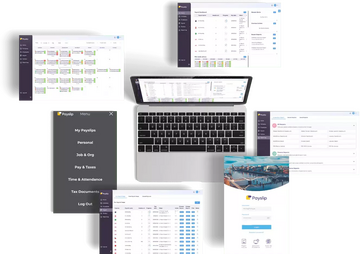
When an organization has multiple in-country providers processing payroll according to their own local laws and data standards, it takes extra work to reconcile information about two employees in different countries. The Payslip platform does this work. We built our software to standardize data from all of your in-country providers.
This allows payroll to talk with other systems — e.g. your HCM — and automate so much work that too many payroll teams still perform manually.
To learn more about how Payslip’s global payroll control platform can help you navigate emerging regulations and other such challenges, book a platform tour today.