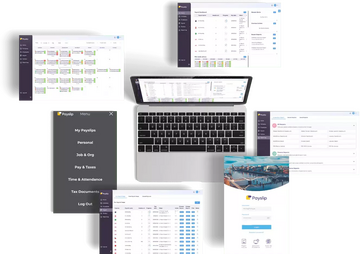

Payslip Global Payroll Control Platform automates pre-payroll through to post-payroll delivering local flexibility within global standardization.
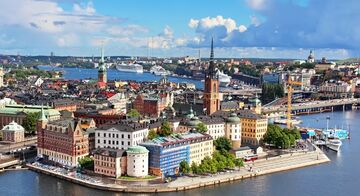
Sweden, the largest Nordic country, is known for its high quality of life, innovation, and strong social welfare system. It boasts stunning natural landscapes, from vast forests and archipelagos to the Northern Lights in Lapland. Sweden is also home to global brands like IKEA, Volvo, and Spotify, and has a rich cultural heritage, including Viking history and modern design.
Payroll in Sweden – 2025 Updates
In 2025, Sweden introduced several payroll updates impacting taxation, benefits, and employment regulations:
- Tax-Free Income for Youths: The annual threshold increased by 635 SEK to 24,873 SEK.
- Government Loan Interest Rate: Reduced by 0.66 percentage points to 1.96%, affecting car benefit values and interest benefit calculations.
- Meal Benefits: Standard values were adjusted to 61 SEK for breakfast and 122 SEK for lunch or dinner.
- Price Base Amount: Increased by 1,500 SEK to 58,800 SEK, influencing benefit values, taxation thresholds, and other standard calculations.
- Extended Growth Support: Reduced employer contributions now apply for up to two employees, with the salary limit raised to 35,000 SEK per month.
- Collective Bargaining Agreements: Around 500 agreements covering wages and employment conditions are up for renegotiation, affecting over 3.4 million employees.
Employers should stay updated on these changes to maintain compliance and optimize payroll processes.
Sweden Payroll – Basic Facts
Sweden follows a monthly payroll cycle, typically paying salaries on the 25th. Employers contribute around 31.42% in social security, while employees pay municipal and national income tax. The standard workweek is 40 hours, with a minimum of 25 vacation days per year. Sick leave is covered by employers for the first 14 days, then by social security. Sweden offers 480 days of parental leave, often shared between parents. Collective agreements play a major role in determining wages and working conditions. Notice periods range from 1 to 6 months, depending on tenure.
In Sweden, the tax year follows the calendar year, running from January 1st to December 31st. Employees file their tax returns in the spring, typically by May 2nd, for the previous year's income. Employers report payroll taxes monthly to the Swedish Tax Agency (Skatteverket).
Tax and Social Security Considerations
Personal Taxes
- Municipal Tax: Varies by municipality, typically ranging from 29% to 35%.
- National Income Tax: 0% on taxable income up to SEK 625,800. 20% on taxable income exceeding SEK 625,800.
- Social Security Contributions (Employee): Generally 7%, capped at SEK 2,140 per year.
Corporate Taxes
- Corporate Income Tax (CIT): Flat rate of 20.6% on profits.
- Employer Social Security Contributions: Approximately 31.42% of gross salary, covering pensions, healthcare, and other benefits.
- Value Added Tax (VAT):
- Standard Rate: 25%.
- Reduced Rates: 12% (e.g., food, restaurants) and 6% (e.g., books, transport).
Other Types of Taxes in Sweden
In addition to personal and corporate income taxes, Sweden imposes various other taxes:
1. Payroll Taxes: Employers must pay 31.42% in social security contributions for employees, covering pensions, healthcare, and other benefits.
2. Property Taxes: Municipal Property Tax: Up to 0.75% of a property's taxable value (residential and commercial properties).
State Property Tax: 1% for rental apartments and 0.4% for industrial properties.
4. Capital Gains Tax: 30% on capital gains from selling stocks, real estate, and other assets.
5. Dividend & Interest Tax: 30% tax on dividends received by individuals.
Interest income is taxed as capital income at 30%.
6. Wealth & Inheritance Taxes: Sweden does not impose wealth or inheritance taxes.
7. Environmental & Excise Taxes:
- Carbon Tax: One of the highest globally, levied on fossil fuel emissions.
- Alcohol & Tobacco Taxes: High taxes on alcoholic beverages and cigarettes.
- Energy Tax: Applied to electricity and fuel consumption.
Sweden’s tax system is structured to support its extensive welfare programs, with high social security contributions and progressive income taxation.
Social Security Considerations
For Employees
- Contribution: 7% of gross income, capped at SEK 2,140 annually.
- Coverage: Healthcare, pensions, sick leave, unemployment benefits, and parental leave.
- Benefits: Compensation for sickness, parental leave (up to 480 days), and unemployment.
For Employers
- Contribution: 31.42% of gross salary, covering pensions, health insurance, parental leave, and unemployment benefits.
- Reductions: Lower rates for employees under 26 and for startups.
- Reporting: Employers pay contributions monthly to Skatteverket (Swedish Tax Agency).
Compensation and Benefits
Minimum wage
Sweden does not have a statutory minimum wage set by the government. Instead, wages are generally determined through collective bargaining agreements between employers and trade unions. These agreements cover most sectors, and the wages vary depending on the industry, role, and experience.
In sectors where no collective agreements exist, employers are free to set wages, but most companies follow industry standards based on union-negotiated agreements. Typically, minimum wages in Sweden are around SEK 22,000–25,000 per month for entry-level positions, depending on the sector and location.
As of 2025, there is no official national minimum wage, but wage levels are generally high due to Sweden's strong labor market regulations and collective bargaining system.
Working hours
Typically 40 hours per week, or 8 hours per day (Monday to Friday).
Overtime
Overtime is compensated at a higher rate, usually 1.5x the regular hourly wage, and sometimes 2x for work beyond a certain threshold. Overtime is often negotiated through collective bargaining agreements.
- Rest Periods: Employees are entitled to a minimum 11-hour rest period between shifts, and a 36-hour rest period once a week (typically weekends).
- Paid Breaks: Breaks are not required by law but are common in collective agreements (e.g., a 30-minute break for shifts longer than 6 hours).
Public Holidays
Here are the official public holidays in Sweden for 2025:
- New Year's Day – January 1 (Wednesday)
- Epiphany – January 6 (Monday)
- Good Friday – April 18 (Friday)
- Easter Monday – April 21 (Monday)
- Labour Day – May 1 (Thursday)
- Ascension Day – May 29 (Thursday)
- Midsummer Day – June 21 (Saturday)
- Swedish National Day – June 6 (Friday)
- Midsummer Eve – June 20 (Friday)
- All Saints' Day – November 1 (Saturday)
- Christmas Day – December 25 (Thursday)
- Boxing Day – December 26 (Friday)
Note that Midsummer Eve (June 20) is not a statutory holiday, but many businesses close for the day as it is a widely celebrated holiday.
Leave
- Annual Vacation Leave: Minimum of 25 days per year. Employees can take leave at a time agreed with the employer. Typically, vacation leave is paid, and employees can accrue vacation days.
- Sick Leave: Employees are paid by the employer for the first 14 days of sick leave (excluding the first day, which is a waiting period). After 14 days, the Swedish Social Insurance Agency (Försäkringskassan) covers sick leave benefits. Sick leave is generally compensated at 80% of the employee's salary.
- Parental Leave: 480 days of paid parental leave per child, which can be shared between both parents. Payments are made by Försäkringskassan, with the compensation rate varying (typically around 80% of salary for the first 390 days). Parents can also take additional unpaid leave beyond the 480 days.
- Maternity Leave: Included under the parental leave, with the same 480 days shared between both parents. Maternity leave specifically covers the period before and after childbirth. Pregnancy benefits are available for employees who need to stop working due to health risks.
- Paternity Leave: Part of the shared 480 days of parental leave. Fathers can take a portion of this leave within the first year of the child’s life.
- Compassionate Leave: Leave for the death of a close family member or for caring for a seriously ill family member. Often provided under collective agreements.
- Public Holidays Leave: Employees are entitled to public holidays off, with the possibility of compensatory pay if they work on those days.
- Study Leave: Employees may be entitled to study leave, typically under collective agreements, with partial compensation for education or skill development.
- Leave for Military Service: Swedish citizens can take leave for military service or civilian service, and the employer is required to provide job security during this period.
Foreign Workers in Sweden
- Work Visa: Non-EU/EEA citizens need a work visa, which must be obtained before arriving in Sweden. The employer must offer a valid job and demonstrate that no local candidates are available.
- EU/EEA Citizens: Do not need a work visa.
- Non-Resident Taxes: Non-residents pay a 25% flat income tax on Swedish-sourced income. Social security contributions may apply depending on the work contract. Double taxation agreements with other countries may provide tax relief.
Foreign workers must secure a work visa (if non-EU/EEA) and understand their tax obligations based on their residency status and work duration.
For more information about how our Global Payroll Control Platform integrates with local payroll providers in Sweden, contact us today.