

Late, missing, or inaccurate payroll data can result in costly mistakes while also slowing down the entire process. Accurate data flows are foundational to global payroll delivery and management at multinational companies around the world.
Get the data right, and the rest will follow. Most data related errors are preventable. They tend to occur when there is an over reliance on manual data entry and Excel spreadsheets. There is simply too much data to manage, and this leads to mistakes like typos, omissions, and duplications. In this article, we will take a look at some of the things you can do to prevent data errors in global payroll.
Automate your payroll data
Automation is the key to preventing errors in global payroll. By automating the end-to-end payroll process, you can eliminate manual data entry and ensure that data is always accurate. It is a new era for global payroll delivery and AI-powered automation is readily available to help global payroll teams transform how they manage data for payroll.
Automated data flows can completely remove the need for manual data entry into Excel spreadsheets. You should automate data flows between all related systems: payroll software, HCM systems, local country payroll providers, finance systems as well as payroll calculation engines. Human error is removed from the process and the automated identification of discrepancies prevents accuracy problems arising.
Automating and validating global payroll data workflows creates massive time savings and productivity gains in every payrun. Removing manual work and creating more time means smart, fast, and error-free global payroll.
Standardized your payroll data
Payroll data is critical for organisations with a global workforce. It provides insight into employee compensation and benefits, tax liabilities and social security contributions.
However, payroll data can be complex and difficult to manage, particularly when it spans multiple countries. This is where standardisation comes in.
Standardising payroll data offers a number of benefits. First, it makes it easier to compare data across countries because the data is in a similar format. This is valuable for identifying patterns and trends that might otherwise be missed. Second, it reduces the risk of errors and ensures that all employees are paid correctly. It also makes it easier to comply with local employment laws and regulations.
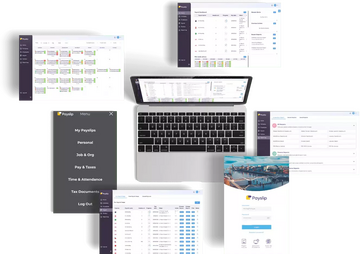
The best way to standardize payroll data is to use a centralised payroll system that consolidates data from multiple sources into a single database. The global payroll control platform at payslip is the perfect example of this- it takes data from all sources related to payroll and standardizes it all at a global level. It helps you see what is happening across each of your countries and prevent payroll data errors from happening. It is much easier to spot errors and anomalies when all of the payroll data across all of the countries is standardized in the same format.
Monitor local vendor performance
When working with local vendors to process payroll in multiple countries, it is important to monitor their performance. This includes tracking things like how quickly they turn around data requests, how accurate their data is, and whether they are complying with local employment laws and regulations. Doing this can help you identify problems early on and prevent them from turning into bigger issues down the road.
Ideally, you want to be able to manage vendor performance via reporting analytics and digital dashboard metrics. This is achievable on a global payroll control platform which not only provides these things but also enables you to communicate directly with local vendors inside the platform. You can access, view and control over all your ICPs (and related data) on a single platform while systems notes for sharing helpful information means that potential issues or data errors can be seen and acted upon before they become a problem.
Use a single platform approach
One of the key reasons for global payroll data errors today is the complex nature of multi-country payroll delivery and management. Lots of data is contained in multiple disparate systems and there are different systems used across different countries. It is little surprise then that things get missed and data errors occur.
One of the best ways to prevent errors in global payroll data is to bring all of the data together into one centralised location. Doing this has a number of benefits, including making it easier to compare data across countries, reducing the risk of errors, and simplifying compliance with local employment laws and regulations.
A single platform approach to global payroll increases the level of visibility and control you have over your payroll countries while making it easier to manage the end-to-end process. The ideal scenario is to adopt a single platform approach that offers automation and integration so that you can be sure the integrity of your global payroll data is being prioritised at all times. When everything is being managed from one location, you can see clearly what is happening across all of your countries and can feel confident that your payroll data is accurate.