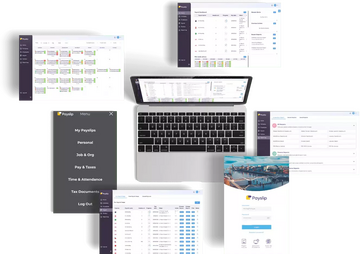


Payslip Global Payroll Control Platform automates pre-payroll through to post-payroll delivering local flexibility within global standardization.
South Africa, located at the southern tip of Africa, is a nation celebrated for its rich cultural diversity, stunning landscapes, and complex history. Known as the "Rainbow Nation" for its blend of ethnicities and traditions, it boasts iconic landmarks like Table Mountain, the Kruger National Park, and the Garden Route. South Africa has made significant strides since the end of apartheid in 1994, emerging as a vibrant democracy with bustling cities like Johannesburg, Cape Town, and Durban. Its economy is one of the largest in Africa, driven by mining, tourism, agriculture, and finance. However, challenges such as inequality and unemployment persist. Despite this, South Africa remains a country with resilient people, a strong spirit, and a remarkable mix of natural beauty and urban innovation.
Payroll in the South Africa – 2024 Updates
In 2024, payroll regulations in South Africa have seen significant updates, particularly in employee tax, retirement funds, and various payroll processing requirements. Key updates include:
- Tax Reform for PAYE: The South African Revenue Service (SARS) has introduced adjustments to PAYE (Pay-As-You-Earn) as part of the "SARS Vision 2024" initiative. These updates emphasize streamlined monthly tax certificate submissions and tighter income tax administration, affecting how companies manage tax reporting on employee income.
- Retirement System Adjustments: The "Two-pot" retirement system, enacted in the 2023 Tax Amendment Bill, allows employees to access part of their retirement savings before retirement while preserving a portion for retirement, impacting how payroll handles retirement contributions and withdrawals
- Travel and Subsistence Allowances: Updated rates now apply to reimbursements for employee travel and subsistence. Employers must report these allowances under specific codes, with new thresholds for domestic and international travel costs. Employees need to keep detailed records of business-related travel expenses if claiming deductions
These changes require employers to review and adjust payroll systems for compliance, particularly in areas such as monthly reconciliations, travel claims, and retirement fund contributions.
South Africa Payroll – Basic Facts
South Africa’s payroll system includes several components essential for compliance with tax, employment, and social security regulations. Here are some key facts about payroll in South Africa:
- Tax Obligations: Payroll in South Africa primarily involves the calculation and deduction of PAYE (Pay-As-You-Earn) tax from employees' salaries, which employers are responsible for submitting to SARS. The tax year begins on March 1st and ends on the last day of February, with tax rates varying based on income brackets
- Mandatory Contributions:
- Unemployment Insurance Fund (UIF): Employers and employees each contribute 1% of the employee's salary to UIF, totaling 2% of monthly remuneration. UIF supports individuals during periods of unemployment, illness, or maternity leave.
- Skills Development Levy (SDL): Employers pay a 1% SDL on salaries if their payroll exceeds R500,000 per year, which funds skills development programs to improve workforce qualifications. - Retirement and Benefits: The introduction of the "Two-pot" retirement system allows employees to access a portion of their retirement savings early, impacting both payroll processing and retirement fund reporting requirements.
- Payroll Administration and Record-Keeping: Employers are required to issue IRP5 or IT3(a) certificates annually to employees for tax filing and must keep payroll records for a minimum of five years, as per SARS regulations.
These core payroll elements ensure compliance with South African labor laws and support social security, tax, and retirement benefits for employees.
The currency of South Africa is the South African Rand (ZAR), symbolized by "R."
Tax and Social Security Considerations
In 2024, South Africa’s tax system includes several types of personal and corporate taxes, designed to fund public services and promote economic stability. Here’s an overview:
Personal Taxes:
- Income Tax: Individuals in South Africa are subject to progressive income tax rates, ranging from 18% to 45% based on annual income brackets. Income tax is calculated on a tax-residency basis, meaning residents are taxed on worldwide income, while non-residents are taxed only on South African-sourced income
- Capital Gains Tax (CGT): Individuals are subject to CGT on the disposal of assets, with a 40% inclusion rate for individuals, effectively taxing capital gains at a maximum rate of 18%. The annual exclusion threshold for individuals is adjusted periodically, often during the national budget announcements
- Dividends Tax: A 20% tax is levied on dividends distributed to South African residents, although certain exemptions may apply for retirement funds and other entities.
- Other Taxes: Individuals may also be liable for Value Added Tax (VAT) on purchases, as well as local property taxes on immovable property ownership.
Corporate Taxes:
- Corporate Income Tax (CIT): South African companies are generally taxed at a flat rate of 27% on worldwide income. Branches of foreign companies are subject to a branch tax at the same 27% rate.
- Value Added Tax (VAT): The standard VAT rate is 15%, levied on goods and services, with certain exemptions for essentials such as basic food items. Businesses must register for VAT if their annual taxable supplies exceed a threshold (currently ZAR 1 million).
- Capital Gains Tax (CGT): Companies are subject to CGT with an inclusion rate of 80%, translating to an effective tax rate of 21.6% on capital gains.
- Dividends Withholding Tax: A 20% withholding tax applies to dividends paid by companies, though it may be reduced for qualifying foreign shareholders under double-taxation agreements.
- Other Corporate Taxes: Additional corporate taxes may include the Skills Development Levy (SDL) and the Unemployment Insurance Fund (UIF) contributions, which support social welfare and training initiatives in the workforce
These taxes, subject to ongoing reform, reflect South Africa’s aim to balance social needs with economic growth and development incentives.
Social Security System:
South Africa’s social security system aims to support individuals in cases of unemployment, injury, illness, and retirement. It encompasses a range of mandatory contributions and government programs designed to safeguard employees and promote social welfare.
- Unemployment Insurance Fund (UIF): UIF contributions are mandatory for all employers and employees, with each contributing 1% of the employee’s salary, up to a cap. The UIF provides short-term financial relief to individuals who lose their jobs, go on maternity leave, or are unable to work due to illness. The fund also supports dependents of deceased workers.
- Compensation for Occupational Injuries and Diseases Act (COIDA): This insurance covers employees who are injured or contract diseases due to work-related activities. Employers fund this compensation through annual assessments, calculated based on factors like industry risk and payroll size. COIDA helps cover medical costs, rehabilitation, and income support for injured employees.
- Skills Development Levy (SDL): Companies with annual payrolls above ZAR 500,000 must contribute 1% of their payroll to SDL. These funds are directed to the Sector Education and Training Authorities (SETAs), which provide skills development and training programs, addressing workforce skills gaps across various industries.
- Retirement and Pension Plans: South Africa’s "Two-pot" retirement system, introduced recently, enables partial access to retirement savings before retirement, with the remainder preserved for post-retirement. Employees contribute to pension or provident funds through employer-sponsored retirement plans, fostering financial security for employees in retirement years.
Compensation and Benefits
Minimum wage
South Africa's national minimum wage for 2024 rose to R27.58 per hour, effective March 1, marking an 8.5% increase. Special rates apply for certain workers, like those in public works programs (R15.16 per hour). Employers must ensure compliance to avoid penalties under labor laws.
Working hours
In South Africa, the standard workweek is 45 hours—typically 9 hours per day for a five-day week or 8 hours per day for a six-day week.
Overtime
Overtime is capped at 10 hours weekly and paid at 1.5 times the normal rate, or double on Sundays and public holidays.
Public Holidays
In 2024, South Africa will observe 13 public holidays, including New Year's Day on January 1, Human Rights Day on March 21, Good Friday on March 29, and Family Day on April 1. Other notable holidays include Freedom Day on April 27, Workers' Day on May 1, and Election Day on May 29. Youth Day will be celebrated on June 16, with an observance on June 17, while National Women’s Day occurs on August 9. Heritage Day is set for September 24, followed by the Day of Reconciliation on December 16, Christmas Day on December 25, and the Day of Goodwill on December 26
For a complete list and details, you can visit Public Holidays in South Africa.
Leave
In South Africa, employees are entitled to several types of leave as regulated by the Basic Conditions of Employment Act (BCEA):
- Annual Leave: Employees earn 21 consecutive days of annual leave for each year of service, equivalent to 15 working days for a five-day workweek. This leave accrues at a rate of 1.25 days per month.
- Sick Leave: Employees are entitled to six weeks (36 days) of paid sick leave over a three-year period. In the first six months of employment, they earn one day of paid sick leave for every 26 days worked.
- Maternity Leave: Female employees are entitled to four months of maternity leave, which can begin before or after childbirth. They may apply for UIF maternity benefits during this period.
- Parental Leave: Introduced in 2020, this leave allows employees to take ten consecutive days when a child is born, adopted, or fostered. It applies to both mothers and fathers.
- Family Responsibility Leave: Employees are entitled to three days of paid family responsibility leave per year for specific events, such as the illness or death of a close family member.
Foreign Workers in South Africa
In South Africa, foreign workers must obtain a valid work visa before they can legally work in the country. The main types of work visas include:
- General Work Visa: For foreign nationals who have a job offer from a South African employer and meet specific qualifications.
- Critical Skills Visa: For individuals with skills and qualifications deemed critical to the country's economy.
- Intra-Company Transfer Visa: For employees of multinational companies being transferred to a South African branch.
Visa applications generally require a job offer, proof of qualifications, and compliance with labor market testing, which demonstrates that no suitable South African citizens are available for the job
Regarding taxation, non-residents in South Africa are taxed only on their South African-sourced income. They are subject to the same income tax rates as residents, which range from 18% to 45% based on income brackets. Non-residents are also liable for Capital Gains Tax (CGT) on the disposal of South African assets
For more detailed information on work visas and tax obligations for foreign workers, you can refer to the South African Department of Home Affairs and the South African Revenue Service websites.
For more information about how our Global Payroll Control Platform integrates with local payroll providers in the South Africa, contact us today.