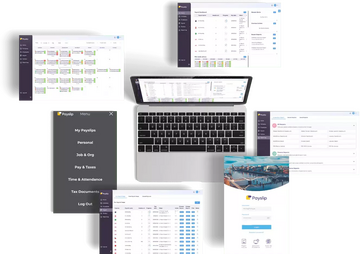


Payslip Global Payroll Control Platform automates pre-payroll through to post-payroll delivering local flexibility within global standardization.
Poland, located in Central Europe, is known for its rich history, vibrant culture, and economic growth. As a hub for technology and business, it offers a skilled workforce and is a popular destination for global companies. Its beautiful landscapes, from the Tatra Mountains to the Baltic coast, make it a diverse and dynamic country.
Payroll in Poland – 2025 Updates
For 2025, Poland will implement several key updates to its payroll and labor regulations:
- Minimum Wage Increase: Starting January 1, 2025, the gross minimum monthly wage will rise to PLN 4,666 (approximately PLN 3,510 net), and the minimum hourly rate will increase to PLN 30.50 (approximately PLN 22.95 net). This is part of efforts to align wages with inflation and improve living standards
- Employer Costs: The increase in wages will also raise employers' mandatory contributions for social security and health insurance, making the total cost of employment for minimum wage workers approximately PLN 5,627
- EU-Directed Changes Ahead: In 2026, Poland will adopt new EU rules for setting minimum wages. These changes aim to introduce greater transparency and fairness across member states, likely impacting wage determination in the coming years
- Overtime Regulations: Employees are entitled to overtime pay ranging from 150% to 200% of the regular wage depending on conditions, such as working nights, weekends, or holidays. Overtime must not exceed 150 hours annually unless stipulated otherwise by agreements.
Poland Payroll – Basic Facts
Payroll in Poland involves monthly salary payments, typically by the 10th of the following month, with progressive income tax rates of 12% up to PLN 120,000 and 32% for higher earnings. Employers and employees contribute to mandatory social security and health insurance, totaling 22.71% for employees and up to 22.14% for employers. In 2025, the minimum gross monthly wage will rise to PLN 4,666, reflecting efforts to align wages with inflation. Standard working hours are 40 per week, with regulated overtime, and payroll records must be retained for 10 years for compliance. These factors highlight the complexity of Polish payroll systems and the need for accurate management.
In Poland, the tax year aligns with the calendar year, running from January 1 to December 31. Annual tax returns must typically be filed by April 30 of the following year.
Tax and Social Security Considerations
For 2025, Poland's tax updates for individuals and corporations include the following:
Individual Taxes
Poland's progressive personal income tax rates remain at 12% for income up to PLN 120,000 annually and 32% for income exceeding this threshold. A flat tax rate of 19% is also available for specific professions or business activities. Additionally, social security contributions, health insurance contributions, and tax-free thresholds (PLN 30,000) continue to apply as in previous years.
Corporate Taxes
The corporate income tax (CIT) rate remains at 19%, with a reduced 9% CIT rate applicable to small taxpayers earning annual revenue below EUR 2 million (approximately PLN 8.57 million). For 2025, Poland is also implementing a global minimum tax for large multinational enterprises with revenues exceeding EUR 750 million, aligned with the EU directive.
Other changes include updated thresholds for small taxpayers and the application of various simplifications tied to the average EUR exchange rate.
Value Added Tax (VAT)
- Standard rate: 23%
- Reduced rates: 8%, 5%, and 0% for specific goods and services.
Social Security Contributions
Both employees and employers contribute to pension, disability, sickness, and accident insurance. These are mandatory and deducted separately from personal income tax.
For 2025 in Poland, social security contributions are distributed between employees and employers as follows:
Employee Contributions
- Pension Insurance: 9.76% of gross salary
- Disability Insurance: 1.5%
- Sickness Insurance: 2.45%
- Health Insurance: 9% (deducted directly from employees, not part of employer contributions)
Employer Contributions
- Pension Insurance: 9.76% of gross salary
- Disability Insurance: 6.5%
- Accident Insurance: Typically 1.67% (varies by risk classification of the industry)
- Labor Fund: 2.45%
- Guaranteed Employee Benefits Fund: 0.1%
- Employee Capital Plans (PPK): 1.5% to 4% (depending on employee participation level)
These contributions are mandatory and calculated based on the employee's gross salary. Employers are responsible for managing and submitting these contributions to Poland's Social Insurance Institution (ZUS) by the 15th of the following month.
Health Insurance Contributions
Employees pay 9% of their gross salary for health insurance.
Excise Duty
Levied on specific goods, such as alcohol, tobacco, and fuel.
Real Estate Tax
Paid by property owners, with rates set annually by local governments.
Civil Law Transaction Tax (CLTT)
Applicable to certain transactions, such as property sales or loan agreements.
Customs Duties
Charged on goods imported from outside the European Union.
Environmental Taxes
Includes fees for emissions, waste management, and resource use, in compliance with EU environmental policies.
Compensation and Benefits
Minimum wage
In Poland, the minimum wage for 2025 will be increased to PLN 4,666 per month, up from the previous rate of PLN 4,300. This increase is a response to inflation adjustments, as Poland anticipates a 5% inflation rate in 2025. The hourly minimum wage will also rise to PLN 30.50. This change is a one-time adjustment for 2025, with no additional increases planned during the year.
Working hours
In Poland, the standard working hours are 8 hours per day, totaling 40 hours per week. Employees are entitled to a break of at least 15 minutes if their working day exceeds 6 hours. Overtime work is permitted but regulated, with a cap on annual overtime hours (typically up to 150 hours per year) unless otherwise specified in the employment contract. Overtime pay is generally 50% above the standard rate, or 100% for overtime on holidays and rest days.
Overtime
In Poland, overtime work is regulated by the Labor Code, with employees entitled to a 50% pay increase for overtime hours and 100% for work on public holidays or rest days. The total overtime is typically capped at 150 hours per year, although exceptions may apply in certain situations. Employees should also receive compensatory time off for overtime worked.
Public Holidays
In 2025, Poland will observe 13 national public holidays, including New Year's Day (January 1), Labour Day (May 1), Independence Day (November 11), and Christmas Day (December 25). These holidays may impact business operations, with most businesses closed or operating on reduced hours. Here is a detailed list of holidays.
Leave
In Poland, employees are entitled to several types of leave, each with specific terms and conditions. The main types include:
- Sick Leave: Employees are paid 80% of their salary for the first 33 days of illness, with 100% coverage in case of pregnancy-related illness or an accident. After that, the Social Security Institute covers the rest for up to 182 days annually.
- Maternity Leave: Female employees are entitled to up to 37 weeks of maternity leave, depending on the number of children. The leave is paid at 100% of the salary, with an option to transfer unused leave to the father.
- Paternity Leave: Fathers are entitled to two weeks of paid leave, to be taken within 24 months after the child's birth or adoption. This is also paid at 100% of the salary.
- Parental Leave: After maternity leave, parents can take up to 41 weeks of parental leave (43 weeks for multiple children). The first six weeks are paid at 100%, followed by a lower rate of 60%.
- Other Leaves: Employees also have access to special leave for personal reasons, educational leave, and flexible childcare leave, especially for parents of disabled children.
Foreign Workers in Poland
In 2025, Poland has introduced some key changes for foreign workers. One notable update is the mandatory requirement for foreign employees to work under an employment contract, which ensures better job security and access to social benefits compared to civil law contracts. Additionally, the work permit process will become fully electronic, eliminating the "labour market test" that previously assessed whether local workers were available for the job. There will also be stricter fines for illegal employment of foreigners, and local authorities will gain more control over issuing permits in certain sectors, based on local labor market conditions.
For foreign workers, the tax obligations for non-residents include personal income tax (PIT) applied on Polish-source income, with a flat rate of 19% for income above a certain threshold. Social security contributions are generally required from both employers and employees, with non-residents often exempt if they maintain social security coverage in their home country.
For more information about how our Global Payroll Control Platform integrates with local payroll providers in Poland, contact us today.