



The value of payroll data is starting to be recognized more and more, particularly among business leaders at multinational organizations who are looking to leverage available data within their organization to carve out a strategic edge in the market. This data, much like the global payroll department itself, was often hidden and difficult to understand or interpret. Thanks to advances in technology, global payroll data and the associated reporting is now much more digestible and informative.
In this article, we'll take a look at some of the uses of global payroll data particularly when it comes to data insight and analytics. We will examine how major multinationals are now using payroll data to help them better understand where money is being spent and how resources are being deployed around the world.
Untapped Resource
“Less than 20% of participants are currently using their global payroll data to help them generate Data Insight and Analytics”
Payslip Survey, June 2020
Payslip recently ran a global payroll webinar in which we asked participants to describe their current or planned usage of global payroll data for data insight and analytics. We were surprised to learn that very few companies were actively using their data, although several participants referenced the fact that they were either sourcing tools to extract this data or currently dedicating resources to spend more time in preparing this data.
It is clear that an untapped resource is in play here and not enough people perhaps truly understand the value and insight that global payroll data can offer. Increasingly, business leaders are requesting this data, but it is also the case that some leaders are either unaware that it exists or have been told by global payroll professionals that the current technology infrastructure does not facilitate adequate reporting when it comes to global payroll insight and analytics. This can be a source of frustration for many forward-thinking executives who can clearly see competitor organizations tapping into this valuable resource and extracting usable and actionable data from their global payroll team.
A relatively straightforward conclusion can be drawn- if you have access to this crucial data, then you should be using it actively and regularly. If you do not have access to this data, then you need to examine your technology stack in operation at global payroll to see what improvements can be made around better reporting functionality. The corporate world has many cautionary tales about organizations who have missed opportunities by failing to pay attention to crucial data.
Extract first. Analyze Second.
You start by inquiring if the technology exists in your global payroll department to extract valuable data and analytics in a digestible and easy to understand format. If this can be done, then you move to phase two which is analysis and understanding. What is the data saying? What key trends keep appearing and in what country or regions? Are there seasonal irregularities or discrepancies where cost figures start increasing or decreasing?
The answers to these questions can provide valuable insight into things like the best location to deploy resources or hire employees in the future. When you know what global payroll is costing you in a particular region, you can create predictive analytics to give you a strong indication of what hiring 200 more employees in this region is likely to cost you in the future. This information is of enormous value to the business leaders responsible for making these hiring decisions and they will be very grateful for detailed, informative and comprehensive data insight and analytics reporting that provides this information.
Advanced global payroll reporting lets you drill down into the data and filter by key metrics that interest you. You may be interested in specific payrun elements like bonuses or overtime payments and how they vary across countries- or you may simply want high-level cost analysis country comparison data. When reporting is consolidated to a global level and is accompanied by flexible data filtering, spotting key trends or anomalies is a lot easier.
When important data like this is available at the touch of a button, it allows people to have very broad conversations around future plans and strategic direction, where they are in a position to support any ideas or conclusions with available data. In this scenario, the global payroll department is adding genuine business value outside of their day-to-day duties of paying employees around the world.
Answers and Insight
Global payroll data has the added advantage of answering basic, yet important questions while also providing useful data for predictive analytics around things like future payroll costs and the best countries to advance into as part of a scaling strategy.
You should not underestimate the answers to basic questions -extracting sufficient data to answer these questions has been a constant source of pain for global payroll professionals over the last 10 years. This is largely down to legacy software and systems which were simply not designed to deliver consolidated reporting and data analytics. The focus of these systems instead was more on data input, checking and validation as well as bank transfers and payment processing. Thankfully, there exists today a much more innovative suite of software which can supply regular data insight and analytics to provide quick answers to important questions like:
How many employees do we have under management? Where are they?
How much does it cost to pay them?
What is our most/least expensive payroll country?
What are payroll costs likely to be in Norway next year based on current analytics?
How many new people joined and how many have left in the last month/quarter or year?
What parts of our compensation packages cost the most?
Why did global payroll cost the company less/more in the previous quarter?
Which employees in which countries are doing the most over-time?
What is the total difference in global payroll spend between UK and France?
How do I know I have met compliance obligations in the USA?
What key labor market trends does our data insight point to?
Future Positioning
The answers to these and other questions will be very helpful when leadership and executive teams are working out how best to establish the future positioning of a multinational. Global payroll is one of the most expensive costs and financial drains for any organization, so the more information, insight and analytics they have from this department, the more informed their decision making will be.
Right now, thanks to the global pandemic that has dramatically altered the business landscape around the world, the future of office life and office locations has been cast into doubt. Companies everywhere are doing their due diligence and research around the options available to them. The future may look very different and the relative success of remote working during the pandemic has raised questions around the long term value of investing huge amounts of money in city center property rental to house a workforce that has proven capable of working offsite or from home.
Remote workers or office buildings in cheaper locations are likely to be considered- the data and insight coming from global payroll can provide a lot of insight into how much money can be saved in this area along with what is the optimal location for hiring new, remote employees.
Payslip and Payroll Data
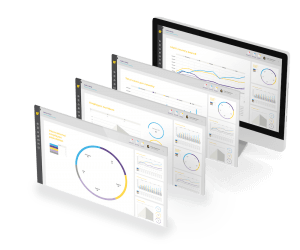
A major focus at Payslip is standardizing data and processes so that global payroll data is distributed in a standardized format across multiple countries while also being easily extractable for consolidated reporting.
The Payslip platform features a Global Reporter tool which provides real-time global consolidated reporting across multiple payroll countries. The tool lets you run instant reports which can be customized or filtered by employee, country or pay run element.
The platform’s user-friendly dashboard means you can see who is doing what in your global payroll at any time, and you can run a customized report at the touch of a button. Available reports include:
- Payroll Comparison Reports
- Employee Headcount Reports
- Country and Business Unit Reports
- Audit Workflow Reports and more.
Talk to our team about how the Global Reporter tool can be used for actionable data insight and analytics.