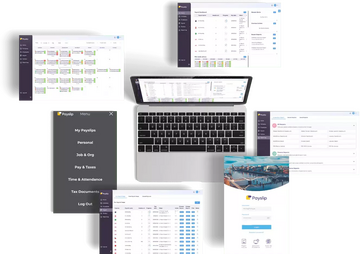


Payslip Global Payroll Control Platform automates pre-payroll through to post-payroll delivering local flexibility within global standardization.
The Netherlands, located in Northwestern Europe, is known for its picturesque canals, tulip fields, windmills, and innovative infrastructure. A constitutional monarchy, its capital is Amsterdam, while The Hague hosts the government and international organizations. Renowned for its cycling culture, the Netherlands boasts a high standard of living, progressive social policies, and a strong economy driven by industries like agriculture, technology, and trade. Its flat landscapes, vibrant arts scene, and rich history make it a unique blend of tradition and modernity.
Payroll in the Netherlands – 2025 Updates
As of January 1, 2025, the Netherlands has implemented several key payroll and employment law changes:
- Minimum Wage Increase: The minimum wage has risen by 2.75%, setting the hourly rate at €14.06 for employees aged 21 and older.
- 30% Ruling Adjustments: The expatriate tax benefit remains at 30%, but the qualifying salary thresholds have been updated to €46,660, and €35,468 for those under 30 with a master's degree. Further changes are planned for 2027.
- Remote Work Allowance: The tax-free remote work allowance has increased to €2.40 per day, reflecting the ongoing support for remote working arrangements.
- Work-Related Costs Scheme: The tax-free allowance percentage for the first €400,000 of the total taxable salary has been raised from 1.92% to 2%, providing employers with a slightly higher margin for tax-free benefits.
- Abolition of Low-Income Benefit (LIV): The LIV, an annual subsidy for employers with low-income employees, has been discontinued, potentially increasing labor costs for affected employers.
- Transition Payment Cap: The maximum transition payment for employees upon dismissal has been increased to €98,000, offering greater financial security during employment transitions.
- Salary Criteria for Knowledge Migrants: The salary thresholds for highly skilled migrants have increased by 6.7%, setting the bar at €5,688 for those aged 30 and above, and €4,171 for those under 30.
- Enforcement on False Self-Employment: The Dutch Tax Authority has lifted the enforcement moratorium, beginning to enforce regulations related to false self-employment, with a focus on the criteria established in the Deliveroo ruling.
These changes reflect the Dutch government's efforts to balance fair compensation, labor market flexibility, and fiscal responsibility.
The Netherlands Payroll – Basic Facts
The Netherlands operates its payroll system on a tax year that aligns with the calendar year, running from January 1 to December 31. Salaries are typically paid monthly, with deductions for income tax, social security, and pensions, using progressive tax rates between 36.93% and 49.5%. The national currency is the euro (€), and the minimum wage in 2025 is €14.06 per hour for employees aged 21 and older. Employees are entitled to at least 20 paid vacation days annually, with 8% holiday pay usually paid in May. The standard workweek is 36–40 hours, and expatriates may benefit from the 30% ruling, which provides tax exemptions on part of their salary. Employers must issue detailed payslips, and employees dismissed after two or more years are entitled to a transition payment capped at €98,000 or one year’s salary.
Tax and Social Security Considerations
Personal Income Taxes: The tax year aligns with the calendar year (January 1 to December 31). Personal income tax follows a progressive system, with rates of 36.93% for incomes up to €73,031 and 49.5% for incomes above that threshold. Employers deduct these taxes directly from employees' salaries, along with mandatory contributions for social security.
Corporate Taxes: Corporate income tax is levied on company profits. The 2025 rates are 19% for taxable profits up to €200,000 and 25.8% for profits exceeding that amount. Businesses must also adhere to specific employer contributions, such as unemployment insurance and healthcare insurance.
Social Security Contributions: Employers and employees contribute to social security, funding national insurance schemes for old age, unemployment, healthcare, and disability. Employer contributions are paid separately and are not deducted from employee wages.
In the Netherlands, corporations benefit from various tax deductions and exemptions to encourage investment, innovation, and compliance. Here are the key deductions and exemptions for 2025:
Corporate Tax Deductions:
- Depreciation of Assets: Businesses can deduct depreciation on tangible and intangible assets, subject to specific rules. Real estate used by the business can only be depreciated to 100% of the WOZ value (government-assessed value).
- R&D Deduction (Innovation Box): Income derived from innovative activities (qualifying under the Innovation Box regime) is taxed at a reduced rate of 9%, provided it meets certain criteria, such as having a patent or R&D declaration.
Investment Allowances:
- KIA (Small-Scale Investment Allowance): Tax deduction for investments in assets between €2,400 and €353,973.
- EIA (Energy Investment Allowance): Deductions for investments in energy-efficient technologies or renewable energy, allowing up to 45.5% of the invested amount to be deducted from taxable profits.
- MIA/VAMIL: Environmental investment schemes allow deductions and accelerated depreciation for investments in environmentally friendly technologies.
Interest Deductions: Interest on loans taken for business operations is deductible, but there are restrictions to prevent tax base erosion (e.g., thin capitalization rules and earning stripping rules limiting interest deductions to 30% of EBITDA).
Corporate Tax Exemptions:
- Participation Exemption: Dividends and capital gains from qualifying shareholdings (usually 5% or more) are exempt from corporate income tax, encouraging holding structures.
- Fiscal Unity: Companies within the same group can form a fiscal unity for corporate tax purposes, allowing profits and losses to be offset within the group.
- Dividend Withholding Tax Exemptions: Dividends paid to qualifying EU/EEA parent companies or those in countries with tax treaties may be exempt from withholding tax.
- International Tax Treaties: The Netherlands has an extensive tax treaty network, preventing double taxation and offering reduced withholding tax rates on cross-border payments.
Other Types of Taxes in the Netherlands:
1. Value Added Tax (VAT)
- Standard Rate: The standard VAT rate in the Netherlands is 21%, applied to most goods and services.
- Reduced Rate: A 9% reduced rate applies to essentials like food, medicines, books, and public transport.
- Zero Rate: Exports and certain intra-community supplies are subject to a 0% VAT rate.
- Exemptions: Some services, such as healthcare, education, and financial services, are exempt from VAT. Businesses must register for VAT and file periodic returns (monthly, quarterly, or annually).
2. Wage Tax
Employers are required to withhold wage tax from employees’ salaries as part of payroll processing. This is an advance payment of the employee’s personal income tax liability.
3. Social Security Contributions
Employers must contribute to national insurance schemes, which cover old age, disability, unemployment, and healthcare. Contributions are based on employee wages and are not deducted from employee salaries.
4. Real Estate Transfer Tax
When purchasing property, buyers are subject to a real estate transfer tax: 10.4% for commercial properties and residential properties not used as a primary residence. 2% for owner-occupied residential properties. Exemptions exist for first-time homebuyers under certain conditions.
5. Environmental Taxes
The Netherlands imposes environmental taxes to promote sustainability, including:
- Energy Tax: Levied on electricity, natural gas, and other fuels.
- Waste Tax: Applied to landfill and incineration of waste.
- Water Tax: Charged on the extraction and use of groundwater.
6. Dividend Tax
A 15% withholding tax applies to dividends paid to shareholders. This may be reduced under tax treaties or exempt for EU/EEA parent companies under the participation exemption.
7. Customs and Excise Duties
The Netherlands, as part of the EU, levies customs duties on goods imported from outside the EU. Excise duties are applied to specific products like alcohol, tobacco, and fuel.
8. Motor Vehicle Taxes
- Vehicle Registration Tax (BPM): Levied on the purchase of new or imported vehicles, based on CO₂ emissions.
- Motor Vehicle Tax (MRB): An annual road tax based on vehicle weight and fuel type.
- Electric Vehicles: Tax benefits, such as reduced BPM and MRB, apply to electric and low-emission vehicles.
Compensation and Benefits
Minimum wage
The minimum wage in the Netherlands for 2025 is set at €14.06 per hour for employees aged 21 and older. This is based on full-time employment, typically 36–40 hours per week, depending on the industry or employment contract.
For younger workers (under 21), minimum wage rates are scaled based on age, ranging from 30% to 80% of the adult minimum wage. The minimum wage is reviewed and adjusted biannually in January and July to reflect inflation and economic conditions.
Working hours & overtime
In the Netherlands, the typical workweek is 36 to 40 hours, with the most common arrangement being 40 hours for full-time employees. However, work hours can vary based on the specific industry, company policies, or individual contracts.
Key Points on Working Hours:
- Overtime: Overtime is generally compensated either through additional pay (typically at a higher rate) or compensatory time off, depending on the employment contract.
- Breaks: Employees are entitled to breaks during their workday. For a workday longer than 5.5 hours, a break of at least 30 minutes is required.
- Flexible Work Arrangements: The Netherlands has a strong culture of work-life balance, and flexible working arrangements, such as part-time work, remote work, or adjusted hours, are common.
- Maximum Weekly Hours: Dutch labor laws allow for a maximum of 60 hours per week on average over a 4-week period. However, for safety and health reasons, working more than 12 hours a day on a regular basis is discouraged.
Employees are also entitled to at least 4 times the weekly working hours in vacation days annually (20 days for a 5-day workweek), with many companies offering additional days as a benefit.
Public Holidays
In 2025, the Netherlands will observe the following public holidays: New Year's Day (January 1), Good Friday (April 18), Easter Sunday (April 20), Easter Monday (April 21), King's Day (April 27), Labour Day (May 5), Ascension Day (May 14), Pentecost Sunday (May 24), Pentecost Monday (May 25), Sinterklaas (December 5), Christmas Day (December 25), and Boxing Day (December 26). Some holidays, like Labour Day, are only observed by certain sectors, and public celebrations are especially significant on King's Day. Here is a detailed list of holidays.
Leave
In the Netherlands, employees are entitled to various types of leave, including:
- Annual Leave (Vacation Days): Employees are entitled to a minimum of 4 times their weekly working hours per year (e.g., 20 days for a 5-day workweek). Many employers offer additional vacation days as a benefit.
- Public Holidays: Employees are generally entitled to paid leave on public holidays, though this can depend on their employment contract or sector.
- Sick Leave: Employees are entitled to sick leave if they are unable to work due to illness. Employers are required to pay at least 70% of the employee's salary for the first two years of sickness, although this may be higher depending on the contract.
- Maternity Leave (Zwangerschapsverlof): Female employees are entitled to 16 weeks of maternity leave (at least 4-6 weeks before the expected due date). During this period, they receive a benefit paid by the government at 100% of their daily wage (up to a set maximum).
- Paternity Leave (Partnerverlof): Partners are entitled to 1 week of paid paternity leave within the first 4 weeks after the child’s birth, paid at 100% of their salary.
- Parental Leave (Ouderschapsverlof): Employees with children under the age of 8 are entitled to 26 weeks of unpaid parental leave. They can request a reduced work schedule for this period, but this is unpaid unless otherwise stated in the employment contract.
- Care Leave: Employees are entitled to leave for caring for sick family members. They are entitled to 2 days of paid emergency care leave in case of urgent care needs, with further leave potentially being unpaid or compensated as per the contract.
- Bereavement Leave: Employees are entitled to time off for the death of close family members. The duration depends on the employer, but it is typically around 3 days.
- Study Leave: Employees may be entitled to leave for educational purposes, depending on the employer’s policies. This can sometimes be paid or unpaid.
These leaves are based on statutory requirements, but specific entitlements may vary depending on individual employment contracts or collective labor agreements (CAOs).
Foreign Workers in the Netherlands
Working Visas for Foreign Workers
Foreign workers from outside the European Union (EU) or European Economic Area (EEA) generally need a visa and/or residence permit to work in the Netherlands. The most common permits for foreign workers include:
- Highly Skilled Migrant Visa: Aimed at highly qualified professionals with a job offer from a Dutch employer. To qualify, applicants must meet a minimum salary threshold, which is updated annually. For 2025, the salary requirement is around €4,840 per month for employees aged 30 or older. The visa is typically granted for up to 5 years, depending on the contract length.
- EU Blue Card: This is for highly skilled workers with a job offer in a position requiring a higher education degree. Applicants must meet certain salary and qualification criteria, and the salary threshold is similar to the Highly Skilled Migrant Visa. The Blue Card is valid for up to 4 years and can be extended.
- Intra-Company Transfer (ICT) Permit: This visa allows employees to transfer within multinational companies to work at a Dutch branch. It is available for managers, specialists, or trainees and can be issued for 1 to 3 years.
- Orientation Year Visa (Zoekjaar): Graduates of top-tier Dutch universities or foreign universities recognized by the Dutch government can apply for a visa to stay in the Netherlands for up to 1 year to search for work. Applicants must prove they graduated from a recognized institution.
- Work Permit for Non-EU Nationals: Foreign workers without high-skilled status can apply for a work permit (TWV), which is linked to a specific job. The employer must demonstrate that no Dutch or EU/EEA candidate can fill the position before the permit is granted.
Taxes for Foreign Workers
Foreign workers are subject to the same tax rules as Dutch nationals, though there are specific exemptions and tax advantages for expats:
- Income Tax: The Netherlands uses a progressive tax system for personal income, with rates for 2025 ranging from 36.93% for income up to €73,031 to 49.5% for income exceeding that threshold. Foreign workers are taxed on their worldwide income if they are considered a Dutch tax resident, meaning they live in the Netherlands for more than 183 days a year.
- 30% Ruling: For highly skilled expatriates, the 30% tax ruling allows employers to grant tax-free reimbursement of up to 30% of the worker's gross salary. This is typically granted for a period of 5 years and is a significant tax benefit to incentivize foreign talent. The ruling is available to skilled workers who are hired by a Dutch employer and meet certain salary and skill level requirements.
- Social Security Contributions: Foreign workers are also required to contribute to Dutch social security schemes for healthcare, unemployment, and pensions. These contributions are deducted directly from the employee's salary. However, if the worker is already covered by a social security system in another EU/EEA country or Switzerland, they may not be required to contribute to Dutch social security, under certain conditions.
- Tax Treaties: The Netherlands has tax treaties with many countries to prevent double taxation. This ensures that foreign workers are not taxed on the same income in both their home country and the Netherlands. Workers from countries with a treaty may be eligible for tax exemptions or reductions on certain types of income.
- VAT on Salaries: Foreign workers are generally not subject to VAT on their salaries, as VAT applies to goods and services, not individual income. Foreign workers can also access benefits such as healthcare, public services, and family allowances once they are tax residents.
For more information about how our Global Payroll Control Platform integrates with local payroll providers in the Netherlands, contact us today.