

For decades, payroll has been viewed as a non-negotiable operational function. It needs to be accurate, compliant, and on time. Beyond that, it rarely earned attention from executive leadership.
According to the Global Payroll Agility Report 2025, 35.7 percent of organizations view payroll as a strategic function. But while that leaves two-thirds of companies seeing it as essential but not strategic, that mindset is changing.
This perception gap is a problem. Not because payroll needs recognition, but because undervaluing payroll means overlooking its potential to influence workforce strategy, risk mitigation, and financial insight.
If your company still sees payroll as a cost to be contained, rather than a capability to be leveraged, it's time to rethink.
Why Payroll Is Still Seen as Tactical
1. Legacy positioning
Payroll has traditionally been buried within HR or finance, often with limited visibility or influence at the leadership table. Its primary metric of success was staying off the radar - no errors, no complaints.
2. Disconnected systems and data
When payroll systems are fragmented or manual, it is difficult to generate strategic insights. This reinforces the perception that payroll is only about calculations and compliance, not intelligence.
3. Limited automation
Manual processes tie payroll teams to time-consuming operational tasks, leaving little room for strategic contributions. In the report, 26.2 percent of companies still rely on manual payroll processing.
4. Lack of real-time visibility
Only 9.5 percent of organizations have real-time, AI-powered analytics. Without timely, accurate data, payroll cannot influence workforce or cost-related decisions in a meaningful way.
Why This Needs to Change
Global payroll is a rich source of workforce intelligence. It is the only function that consistently tracks labor costs, employment status, tax exposure, and headcount across the entire organization. When payroll is treated as a strategic partner, companies benefit in measurable ways.
1. Cost control and forecasting
Payroll data enables finance teams to forecast labor costs with precision. This is essential for planning, budgeting, and managing volatility in high-growth or global businesses.
2. Compliance and risk management
Payroll is on the front line of local regulation. A strategically empowered payroll team can help the business stay ahead of compliance risks, tax changes, and cross-border employment issues.
3. Workforce insights
Payroll sees changes in employee trends before most other functions. From overtime spikes to sudden headcount shifts, this data can inform HR strategies and operational planning.
4. Agility and resilience
In a world where change is constant, payroll teams that have real-time data and centralized control can adapt quickly. They can onboard new markets, adjust pay structures, and manage vendors without major disruption.
What Strategic Payroll Looks Like
Reframing payroll as strategic does not mean inflating its importance. It means enabling the function to operate at a level that supports decision-making, drives efficiency, and contributes to business performance.
Here’s what that looks like in practice:
- Centralized global visibility with real-time dashboards
- Automation across core workflows, freeing up time for analysis and strategy
- Integration with HR, finance, and time systems to enable cross-functional insight
- Standardized reporting and analytics that support executive planning
- Proactive compliance tracking and scenario modeling for future changes
- Regular communication with leadership on payroll trends, risks, and recommendations
Steps to Shift Perception
If you want to move your payroll function out of the cost center box, start with these actions:
- Audit your current capabilities
Use the Global Payroll Agility Report benchmarks to see how your operations compare to peers. Identify gaps that may be holding your team back from playing a larger role. - Invest in automation and analytics
Prioritize tools that reduce manual work and surface real-time insight. Data is key to changing perceptions. - Get payroll a seat at the table
Find ways to include payroll in cross-functional meetings, transformation initiatives, or planning cycles. Visibility leads to influence. - Tell the story with data
Start sharing regular updates on payroll trends, cost drivers, and compliance risks. Show the value, don’t just describe it. - Champion small wins
Reframing payroll takes time. Highlight improvements, efficiencies, and strategic contributions as they happen. This builds internal momentum.
Forging ahead with Payslip
Payroll will always be a critical operational function. But in a global, fast-moving business landscape, it is also a source of strategic advantage , if organizations are willing and able to unlock its full potential.
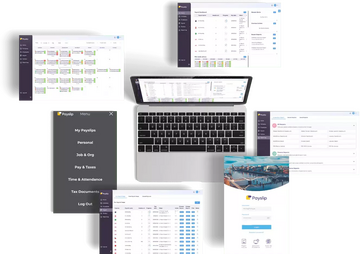
Payslip helps organizations move beyond fragmented, manual payroll operations toward a centralized, data-driven global payroll model. With unified reporting, real-time visibility, and built-in compliance oversight across multiple countries, Payslip enables payroll teams to deliver the workforce intelligence leaders need for smarter financial planning, risk mitigation, and global expansion