

CFOs are naturally curious about how different departments provide value. They will always ask the question, “does this align with business objectives”?
And yes, they rightly want to know what the ROI is on any given expenditure.
Answering these questions requires accurate data, and often detailed conversations with department leaders. The very best CFOs don’t just look at the numbers, they dig into the operations, the processes, and the workflows behind them.
When they have all this information at their disposal, they are then in a far stronger position to assess the true value of a team and their impact. And of course, decide where to invest budget.
With that in mind, let’s look at the payroll function and the merits of investing in technology to support it.
Understanding payroll challenges as CFO
People outside of the day-to-day job may not understand the level of complexity facing global payroll professionals. And partly, that’s because it’s a department that historically has been overlooked and under-resourced.
And it’s also because in the context of a modern, distributed company operating across multiple countries, co-ordinating and consolidating payroll ops is a significant challenge.
Why?
- Lack of standardization
- Regulatory requirements
- Multi-vendor management
- Inaccurate data
- Siloed information
- Lack of visibility
And there’s more that could be added to the list.
This is what your payroll team is facing into every month as they take on the task of ensuring everyone is paid on time and paid the right amount. And the reality is that they do not have the necessary technology supporting them.
Workday’s recent report on the payroll industry lays it bare, 79% of payroll practitioners feel stressed, frustrated, and underserved by technology. In most cases, they are reliant on a patchwork of legacy systems built for a different era and point solutions that can’t communicate with one another.
To be clear, it’s not a process issue or a skills issue. Payroll professionals have become exceptionally adept at utilizing and optimizing what’s available to them (and earn black belts in Excel in the process!).
But they need more support and enablement.
So, at a very basic level, investing in a modern fit-for-purpose global payroll control platform solves a number of those challenges listed above in a single move.
Automation to save time and money
It’s enough to keep your Information Security team awake at night; global payroll ops are mostly conducted via Excel spreadsheets and email. But those considerable security concerns aside, it’s a hugely inefficient way to work.
And it flies in the face of the advances in technology, and the advantages of automated and secure, API-driven data sharing. According to Gartner, nearly 60% of payroll operations have automated more than half of their processes. If your organization hasn’t then you are falling behind.
Let’s look at a specific case study that underlines the issue.
Cloudera is a global company with 1800+ employees across 28 countries. Prior to investing in the right technology, the payroll team was operating a jumble of systems across payroll processing, finance and HR in order to pay them each month (and skilfully so).
At our recent client council, David Nugent, Cloudera’s Director of International Payroll spoke about the chaos of spreadsheets and whiteboards, and the manual effort that it took.
What has automation meant to David and his team? Hundreds of hours saved every year, and cost-savings in efficiency that, year on year, run into 6 figures.
You can read the full case study here.
Typically, we advise that automation can reduce manual work by 98% and save an average of 4 days in every pay cycle.
The power of available, standardized data
Everyone is bored to death by the phrase “data is the new oil”. But there’s truth in it. Imagine though, if you couldn’t extract this oil. It may be too resource-intensive, or you may not even know where it is. As a result, it’s probably going to stay there.
That’s what payroll data is like. A wealth of information, with incredible potential. But it’s largely untouched. The knock-on effect of this is that when the CFO, or the regulator, comes looking for a report it’s a huge undertaking to gather and present this data.
And it takes too long.
If you want payroll data available when you need it, then standardizing and consolidating data is a must-have. The benefits of this for the wider business can’t be over-stated, with the potential for insights into global labour costs, workforce trends and even future cost-projections.
Listen to Michael Brookes, Global Payroll Project Director, discuss how access to real-time payroll has changed the perception of payroll and benefited his organization’s ability to make more informed decisions.

Working with Payslip as a CFO
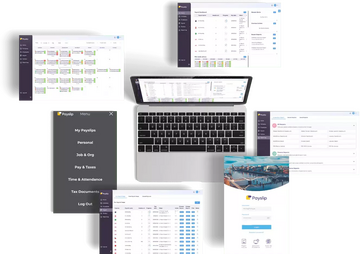
Payslip is built to optimize and automate payroll operations, but the impact it can have for CFOs and their finance teams is wide-ranging; from one-click General Ledgers to automated reports for audits and Treasury approvals. It connects payroll operations with finance operations at a level that makes everyone’s life easier.
You can learn more here.