

Cloud computing allows for a range of services to be delivered online. This can include tools and applications like data storage, software, networking, and more. Integrations via cloud platforms allow for a secure and seamless flow of data for companies across the globe. Innovative, modern, and digitally focused organizations need cloud platforms to support their growth - being agile and responsive allows businesses to take advantage of new opportunities quickly. Companies with ambitions to scale at a rapid pace and capitalize quickly on opportunities need to be operating in the far more agile and responsive cloud environment.
This is important and applicable for data flows between human resources, finance, and global payroll departments, allowing for a seamless transition of important payroll data from multiple sources being accounted for, thanks to the cloud platform. Global payroll delivered via a cloud platform can react quickly to moves into new countries whereas legacy or disconnected systems make everything slower and often become a chokepoint for growth efficiency.
The benefits of integrated cloud platforms?
Human Resource departments, and sometimes the Finance department, contain data that is relevant to payroll. Information including employee’s tax numbers, pension details, previous company details, and year-end tax records are all relevant to payroll. But it’s very common for these departments to not have an official way of sharing this information with the global payroll team who processes the payroll. Because of this, there is usually a manual process via email, where payroll professionals have to duplicate the data in the HR system and enter it into whatever payroll system being used - it’s an inefficient process and takes a long time to complete. Data flows faster and more securely in a cloud environment – and with less manual inputs, there is less likelihood of error.
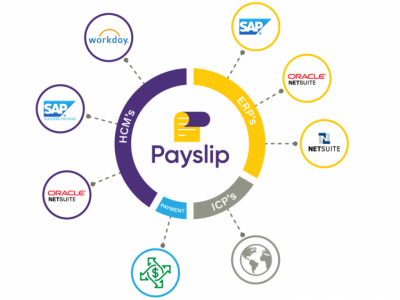
Reporting is another benefit of an integrated cloud platform. Relevant payroll data and insight can be shared quickly and easily from the payroll software over to the HR and finance teams via cloud platform integrations. This enables HR and finance to have up-to-date payroll statistics and information to feed into their own reporting. Without the integrated platform, these departments would have to ask for this information and extract it manually from spreadsheets. This, again, is slow, cumbersome, and not innovative.
The challenges with implementing a cloud platform
Data standardization can be challenging - payroll data formats may be different internally across different departments and are likely to be different externally across multiple local country payroll providers who send data to the company. You’ll need to figure out how to get all of the data needed into a single cloud platform system, and then into a standardized format which makes daily processing of services easier while also paving the way for easier extraction of relevant reporting.
Time and finance can also be challenging - think of this as a digital transformation project. You may need specialized digital professionals onboard and a project manager to see this process through. You will also need financial backing for the investment case to pay for the build of the platform. Lastly, legacy technology can be another challenge. If you have relatively advanced technology, it could be a simple tweak or some digital integration tools that help this transformation. Older, legacy technology may require an overhaul and it is best to invest in digital solutions sooner rather than later. Consider the contracts you may be tied to with your current technology stack provider when making these decisions.
The risks of not integrating payroll into the wider IT ecosystem?
Innovative digital services are becoming the norm for organizations, so a company risks looking outdated without integrating payroll into the wider IT ecosystem. There is a clear justification that global payroll should also benefit from digitization - not doing so is a risk to service delivery and payroll accuracy, especially as global payroll is business-critical. Legacy technology is more error-prone and subjects the global payroll professional to unnecessary frustrations.
Data security is another risk. Global payroll data should not be shared via email or spreadsheets - in fact, 95% of IT leaders say that client and company data is at risk via email. General Data Protection Regulation (GDPR) obligations are best managed in a secure cloud environment - the cloud lets you set up authorized individuals to access the payroll data, which is far more secure, and it can provide you with a clear audit trail of who interacted with the payroll data. This includes information on if and when an individual changed the data and why they did so. This is helpful to prove compliance and for adhering to employment law regulations.
Without digital platform services, a company risks relevant data and information falling through the cracks if they are not aligned and set up to seamlessly share data. For example, if a new hire’s data is entered into a HR system that doesn’t interact with a global payroll system, the HR person may forget to let global payroll know about the new hire and there is a higher risk the new hire won’t get paid on time.
Lastly, demands around specific and comprehensive reporting are increasing at C-suite and board levels, and technology is needed to respond to these demands. It is becoming unacceptable in 2021 for a CFO to not be able to easily compare the cost of labor in one country against another, so an integrated system would ensure that leadership teams would have access to the reporting they need to make strategic decisions.
Moving your global payroll to a cloud platform that integrates into the wider IT ecosystem for a company helps improve payroll delivery in the present while also enabling future scaling. Although it may seem like a lot to take on, the overall benefits and impact the integrated system will have on your company for years to come will be of great value.
For information on the Payslip Platform contact us today.