
The Business Case for AI in Payroll
Global payroll has evolved from back-office admin into a fully-fledged department. And one that is a critical business enabler.
But the next step is becoming a business driver.
The top payroll professionals are no longer just processing wages (though of course that remains the core of the work). They have become strategic advisors. With businesses operating in multiple jurisdictions, payroll leaders must ensure compliance, improve efficiency, and enhance employee experience.
And all while navigating and evaluating emerging technologies.
As regulatory requirements change (unfortunately trending towards greater complexity instead of simplicity), the need for automation at every stage of the pay cycle becomes more pressing.
And in this regard, we’re seeing technology (and in particular AI) tasked with handling the three-headed payroll beast; efficiency, compliance, and accuracy.

Key Challenges in Global Payroll
The more things change, the more they stay the same.
Although the payroll industry is evolving at an incredible pace (and not before its time!) the four core challenges remain consistent year on year.
- Compliance Complexity: Payroll teams must stay ahead of ever-changing local and international tax laws, labor regulations, and reporting requirements to avoid costly penalties.
- Integration Struggles: Many organizations still struggle with fragmented payroll systems that don’t integrate seamlessly with HR and finance platforms.
- Manual Workload: Despite advancements in technology, some payroll teams rely on outdated processes, leading to inefficiencies and errors.
- Data Security & Privacy: Managing sensitive payroll data across multiple locations increases the risk of security breaches and regulatory non-compliance.
These challenges are being turned on their head however by everyone’s favorite topic; AI. It’s been touted as a cure-all for every business problem. But where is it playing a role in payroll?
The Shift Towards Automation: How AI & ML Are Redefining Payroll
Payroll automation is no longer a luxury but a necessity. AI and machine learning (ML) are transforming payroll operations by:
- Reducing Manual Errors: Automated validation checks ensure payroll accuracy.
- Enhancing Compliance: AI-driven analytics help organizations stay ahead of regulatory changes.
- Providing Actionable Insights: Predictive analytics enable payroll leaders to make data-driven decisions.
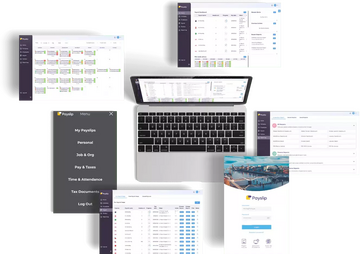
- Improving Employee Experience: Self-service tools empower employees with real-time access to their payroll information.
- Integrate Payroll with HR and Finance Systems: Seamless data flow eliminates discrepancies and improves reporting accuracy.
- Utilize AI for Real-Time Audits: AI-powered compliance checks help identify and rectify errors before payroll is processed.
- Enhance Data Privacy and Security: Payroll leaders must adopt robust security protocols to protect sensitive employee information.
But it’s important to add here that AI, and the use of AI in payroll, is not without its detractors and potential pitfalls. The question of ethics in machine learning is an important one because of the nature of the work and highly sensitive data being handled.
It's something we at Payslip take very seriously and have embedded ethical processes at every stage of our engineering process.
A Strategic Vision for Payroll
Payroll is at a crossroads.
The organizations that embrace automation, integration, and strategic payroll planning will thrive in the evolving landscape. By leveraging AI payroll leaders can drive meaningful transformation that benefits both employees and the business.
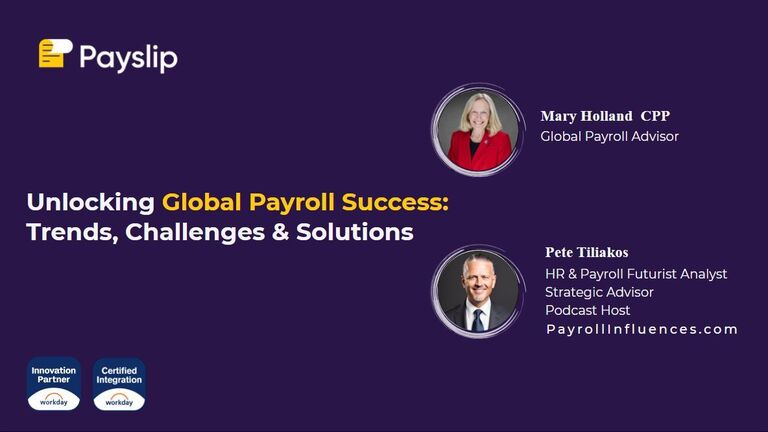
Check out our webinar below, featuring industry veterans Pete Tiliakos and Mary Holland, as they unpack this topic in greater detail.