For decades, two questions have defined successful payroll:
- Were employees paid accurately?
- Were they paid on time?
Those questions remain fundamental. But for global payroll teams, a third question is becoming increasingly important:
Can you prove exactly how the payroll was produced?
For a multinational organization, knowing that the final payroll figure is correct is only part of the story. Payroll teams may also need to demonstrate where the underlying data came from, what changed during the pay cycle, which validations were performed, how discrepancies were resolved, when payroll providers submitted calculations, and who ultimately approved the payroll.
This is why payroll audit trails and continuous audit readiness are becoming increasingly important components of modern global payroll operations. The objective is no longer simply an accurate final number. It is an accurate number with a clear, traceable history behind it.
What is a payroll audit trail?
A payroll audit trail is the chronological record of the data, checks, changes, approvals, calculations, documents and actions involved in producing a payroll.
In global payroll, an effective audit trail should make it possible to reconstruct what happened during a payrun across countries, internal teams and payroll providers.
For example, an organization should be able to determine:
- What payroll input data was received
- Where that data originated
- Whether the data passed validation
- What changed during the payroll cycle
- Which versions of payroll data were created
- What Gross-to-Net calculations were received
- Whether calculations were rejected or returned for correction
- What variances were identified
- How those variances were investigated
- Who reviewed and approved the payroll
- When each action took place
- Which final payroll documents and outputs were produced
The objective is traceability.
An independent reviewer should be able to follow the payroll process from the original inputs through calculation, reconciliation, approval and post-payroll outputs without having to reconstruct the story from spreadsheets, email chains and individual recollections.
Why payroll accuracy alone is no longer enough
Accuracy will always be the primary objective of payroll. But accuracy and evidence are not the same thing.
Imagine that an employee's Net Pay changes significantly from one month to the next. The final calculation may be completely correct. But Finance, HR, an auditor or the employee may reasonably ask why the change occurred.
The payroll team then needs to establish the sequence behind the number.
- Was there a salary increase?
- A bonus?
- A change in benefits?
- A tax adjustment?
- A correction submitted by the payroll provider?
- A late input?
If the information needed to answer those questions exists across different systems, emails, spreadsheets and provider portals, proving what happened can become far more difficult than calculating the payroll itself.
That challenge becomes considerably larger in global payroll.
A multinational may operate across dozens of countries, work with multiple in-country payroll providers and receive payroll inputs from an HCM, time and attendance applications, benefits systems, equity platforms and other sources.
Local expertise remains extremely valuable. In-country payroll providers understand the regulations, practices and requirements of their jurisdictions.
The operational challenge is making the overall process consistent and visible across that provider network.
When every country follows a different process and evidence is stored in different locations, creating a reliable global audit trail becomes difficult.
Global payroll is becoming more data-rich, but that does not automatically make it more auditable
Payroll technology is advancing rapidly.
More organizations are automating data movement, validations, reconciliation and reporting. AI is also beginning to assist payroll teams with analysis, anomaly identification and other time-consuming activities.
But automation introduces an important governance question:
If a payroll process happens automatically, can the organization still explain what happened?
An automated process should not become an invisible process. The opposite should happen.
Automation should make payroll activity easier to trace because actions, validations, exceptions and outcomes can be recorded systematically.
This distinction matters because many organizations still operate in environments where technology and manual processes coexist.
KPMG's 2026 global payroll research describes many organizations as data-rich but insight-poor, with integration, data quality and adoption continuing to create challenges even in environments that have adopted automation.
The objective for global payroll leaders, therefore, should not simply be more automation. It should be controlled, visible and traceable automation.
What should a global payroll audit trail contain?
A strong global payroll audit trail should capture evidence throughout the complete payroll cycle rather than only storing the final payroll result.
1. Payroll input records
The organization should be able to identify the data that entered the payroll process and where it came from.
That can include employee data from the HCM, joiners and leavers, salary changes, time and attendance, bonuses, commissions, benefits, equity information and country-specific payroll inputs. The original input and any subsequent changes should be traceable.
2. Validation results
Payroll teams should be able to demonstrate what checks were performed before data progressed through the pay cycle. If an input failed validation, there should also be a clear record of the issue and its resolution. This turns validation from an informal checking exercise into evidence of a controlled payroll process.
3. Data and file versions
Payroll data changes. Late inputs arrive. Errors are corrected. Payroll providers return updated calculations. Versioning makes those changes visible.
Instead of simply retaining the latest file, payroll teams should be able to establish what changed between versions and why.
4. Payroll provider activity
When organizations use multiple in-country payroll providers, the audit trail should also cover provider interactions.
This can include when payrun files were made available, when Gross-to-Net calculations were returned, how many versions were submitted, whether files required correction and whether agreed timelines were met.
This does not mean replacing valuable local payroll expertise. It means creating a standardized global process around the way the organization works with its chosen providers.
5. Variances and reconciliation
Payroll reconciliation is one of the most important control points in the pay cycle.
An effective audit trail should show which variances were identified between payroll periods, input versions or Gross-to-Net calculations, together with how significant discrepancies were investigated.
The organization should be able to explain not only that reconciliation happened, but also what was found.
6. Approvals and authorization
- Who approved the payroll?
- When?
- Was the appropriate approval process followed?
These sound like straightforward questions until approvals are scattered across email, messaging applications and spreadsheets.
Formal digital approvals create much stronger evidence because responsibility and timing are explicitly recorded.
7. Payroll outputs and documents
The audit trail should extend beyond payroll approval. Relevant outputs may include employee payslips, tax documents, payment files, General Ledger files and reports.
Connecting these outputs with the payroll cycle that produced them makes it much easier to reconstruct historical payroll activity.
What is the difference between payroll compliance and payroll audit readiness?
Payroll compliance means meeting the applicable legal, tax, reporting and employment requirements in each jurisdiction. Payroll audit readiness means being able to produce the records and evidence needed to demonstrate how those requirements and internal controls were addressed.
The distinction matters.
An organization may have completed the correct process but still struggle when evidence is fragmented or difficult to retrieve.
This is particularly relevant in global payroll because record-keeping and reporting requirements differ by jurisdiction. Current global payroll compliance guidance continues to emphasize local record retention and reporting obligations as core elements of international payroll compliance.
Audit readiness therefore needs to be designed into payroll operations rather than treated as a separate project.
From audit preparation to continuous audit readiness
Traditional audit preparation can be highly reactive. A request arrives and payroll teams begin searching.
They locate spreadsheets, download documents, contact local teams, search email chains, retrieve payroll provider files and try to reconstruct why particular changes occurred months earlier.
There is a better operating model.
Continuous audit readiness means generating and retaining payroll evidence as part of the normal payroll process, rather than assembling it retrospectively when an audit or investigation occurs.
Recent payroll tax guidance makes a similar distinction: when the who, what, when and why behind payroll records are captured as part of the process, organizations are better positioned to respond to audit requirements without rebuilding the evidence afterwards.
This changes audit readiness from an event into an operational capability.
Each pay cycle creates its own evidence. Inputs are recorded. Validations are documented. Changes are versioned. Provider activity is visible. Variances are identified. Approvals are recorded. Outputs are retained.
By the time the payroll closes, much of the evidence required to explain that payroll already exists.
How do you build an audit-ready global payroll operating model?
Technology matters, but audit readiness begins with process design.
There are several important principles.
Standardize the global payroll process
A global organization needs a consistent framework for how payroll progresses from inputs through calculations, reconciliation, approval and post-payroll activities.
Countries will always have local requirements and should retain the flexibility needed to meet them.
Standardization does not mean pretending every country's payroll is identical. It means establishing a common operating process while accommodating the local differences that matter.
This is particularly valuable when working with multiple in-country providers. Organizations can retain the local expertise and provider relationships that work best for them while introducing consistent workflows, controls and performance tracking across the overall global operation.
Reduce manual handoffs
Every manual transfer of payroll data creates another point where errors, omissions or version confusion can occur.
Connecting payroll systems and automating appropriate data flows can reduce these human touchpoints while making processes more consistent.
Validate data throughout the pay cycle
Validation should not happen only immediately before payroll approval.
Inputs, Gross-to-Net calculations, employee documents and downstream outputs can all contain issues.
Automated validation throughout the process helps identify discrepancies closer to the point at which they occur.
Record ownership and approvals
Every important payroll action should have clear ownership. Teams should know who is responsible, when an action is due, whether it has been completed and who provided final authorization. This improves both operational accountability and auditability.
Version payroll data
Keeping only the latest version removes valuable context. Versioned data allows payroll teams to determine what changed between payroll submissions and makes reconciliation considerably easier.
Centralize payroll records
Payroll documentation should be securely available to authorized users without depending on individual inboxes or local folders. Centralization improves access, security, business continuity and the ability to retrieve historical evidence.
What role does AI play in payroll audit readiness?
AI has significant potential in payroll, particularly when it helps payroll professionals analyze large volumes of data more quickly.
It can support activities such as identifying unusual changes, examining trends, querying payroll data and directing attention towards anomalies that warrant investigation.
But AI does not remove the requirement for payroll controls. It increases the importance of them.
Payroll teams still need reliable source data, clearly defined processes, appropriate permissions, validations and human accountability.
The strongest model is therefore not AI instead of payroll professionals.
It is AI and automation operating inside a controlled payroll process where results can be reviewed, investigated and explained.
For audit readiness, the fundamental question remains the same:
Can we demonstrate what happened?
How Payslip supports audit-ready global payroll operations
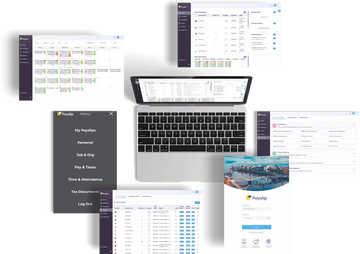
Payslip is designed to transform global payroll through Payroll Control, Integration and AI Automation.
Payslip Control provides a centralized environment for orchestrating global payroll operations, while Payslip Connect automates the flow of payroll data and documents to and from Payslip Control throughout the payroll cycle.
Payslip Control includes eight core features:
- Digital Workflows
- Calendars & Alerts
- Reporting & Analytics
- Vendor Management
- Automated Validations
- Variance Analysis
- Smart Reconciliations
- Document Management
Together, these capabilities help organizations replace fragmented payroll activity with a more standardized and visible global process.
Digital Workflows establish consistent steps and actions across payrolls. Calendars & Alerts make timelines, ownership and overdue actions visible. Automated Validations help identify data issues throughout the process. Variance Analysis and Smart Reconciliations help payroll teams investigate differences and reconcile payroll data. Vendor Management supports a standardized way of working with local payroll providers while allowing organizations to retain provider choice. Reporting & Analytics provide access to global and local payroll insights, while Document Management provides centralized repositories for payroll documentation.
The result is not simply greater visibility into the final payroll number. It is greater visibility into the process that produced it.
Why this matters for the future of global payroll
Global payroll is becoming more automated, more integrated and more strategically important. That changes what good payroll operations look like. Accuracy remains non-negotiable. Timeliness remains non-negotiable.
But global payroll leaders increasingly need a third capability: explainability.
They need to know where payroll data came from, what happened to it, what changed, which controls were applied, how exceptions were resolved and who authorized the final result.
That capability becomes particularly important as organizations scale into new countries, work with more systems and introduce more automation into payroll operations.
The future of payroll control is therefore not simply about producing the right answer.
It is about being able to show, clearly and confidently, how you arrived at it. And the best time to create that evidence is not when somebody asks for it. It is during the payroll process itself.
Frequently Asked Questions
A payroll audit trail is a chronological record of the data, changes, validations, calculations, approvals, documents and actions involved in producing payroll. It allows an organization to reconstruct how a payroll result was produced and who was involved at each stage.
Global payroll can involve multiple countries, systems, teams and in-country payroll providers. A payroll audit trail creates traceability across those activities, helping organizations investigate discrepancies, demonstrate controls and retrieve evidence when required.
A comprehensive payroll audit trail can include payroll inputs, source information, validation results, file versions, Gross-to-Net calculations, provider submissions, variances, reconciliation activity, approvals, timestamps, payroll documents and downstream outputs such as General Ledger and payment files.
Audit-ready payroll means payroll records, controls and supporting evidence are organized and retrievable so the organization can demonstrate how payroll was processed without having to reconstruct the process retrospectively.
Automation can improve audit readiness when payroll actions, validations, exceptions and outputs are systematically recorded. It can reduce manual processing while creating more consistent evidence of the controls applied during each pay cycle.
Yes. Standardization does not require replacing local payroll providers. Organizations can retain in-country providers and their local expertise while implementing consistent global workflows, controls, timelines, data standards and provider performance tracking across the payroll operation.