

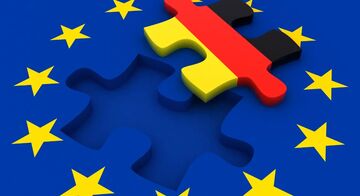
The EU Pay Transparency Directive will significantly impact employers in Germany, expanding existing requirements under the Entgelttransparenzgesetz (Pay Transparency Act) and introducing new obligations around salary transparency, gender pay gap reporting and employee access to pay information.
Germany already has legislation addressing pay transparency, but the Directive introduces broader transparency rights, standardized reporting requirements and stronger enforcement measures across the EU.
For organizations operating in Germany, this means moving beyond existing compliance measures toward more structured, explainable and auditable pay transparency practices.
Here is what employers in Germany need to know.
1. Implementation Timeline
EU transposition deadline: 7 June 2026.
All EU member states, including Germany, must transpose the Directive into national law by this date.
While Germany is currently working toward implementing the Directive, organizations should not wait to begin preparing. The changes required to support pay transparency, including job architecture, pay frameworks and reporting capabilities, will take time to implement.
Employers with 100 or more employees will face the most immediate reporting obligations under the Directive.
2. Interaction with Germany’s Pay Transparency Act
Germany introduced the Entgelttransparenzgesetz (Pay Transparency Act) in 2017 to support gender pay equality.
Under this law:
-
Employees in companies with more than 200 employees can request information about the pay of colleagues performing comparable work.
-
Certain companies must publish gender equality reports as part of their corporate reporting obligations.
The EU Pay Transparency Directive builds on this foundation but significantly expands transparency requirements.
Employers will need to provide clearer information about how pay levels are determined, how pay progression works and how pay differences are justified.
3. Pay Transparency in Recruitment
One of the most significant changes introduced by the Directive is salary transparency during recruitment.
Employers will be required to provide job applicants with the starting salary or pay range before or during the recruitment process.
Organizations will also be prohibited from asking candidates about their salary history.
These changes aim to prevent historical pay inequalities from influencing future compensation decisions and will require employers to establish clear salary ranges before hiring begins.
4. Transparency Around Pay Structures
Employees will gain the right to understand:
-
the criteria used to determine pay levels
-
the criteria used for pay progression
These criteria must be objective and gender neutral.
For many organizations in Germany, this will require formalizing job architecture and pay frameworks to ensure comparable roles are clearly defined.
Without structured pay frameworks, employers may struggle to respond to employee pay information requests or demonstrate compliance.
5. Gender Pay Gap Reporting Requirements
The Directive introduces standardized gender pay gap reporting obligations for employers with 100 or more employees.
Reporting frequency will depend on company size:
-
250+ employees: annual reporting
-
150–249 employees: reporting every three years
-
100–149 employees: reporting every three years from a later implementation stage
If a gender pay gap of 5% or more cannot be objectively justified, employers may be required to conduct a joint pay assessment with employee representatives.
In Germany, this may involve collaboration with the works council (Betriebsrat).
6. Stronger Enforcement and Legal Exposure
The Directive introduces stronger enforcement mechanisms across the EU.
This includes:
-
compensation rights for employees affected by pay discrimination
-
a shift in the burden of proof in equal pay claims
-
financial penalties for non-compliance
As pay transparency increases, organizations will need to ensure their pay structures are well documented, defensible and supported by reliable data.
7. What This Means for Payroll Teams in Germany
Payroll will play a critical role in supporting compliance with the EU Pay Transparency Directive.
Employers will need:
-
accurate and standardized payroll data
-
clear job architecture to define comparable roles
-
reliable reporting capabilities
-
strong audit trails and governance controls
For multinational organizations operating in Germany, a major challenge is often fragmented payroll data across multiple providers, countries and systems.
Without consolidated payroll data, producing consistent pay transparency reports across entities and jurisdictions becomes significantly more complex.
8. How Employers in Germany Can Prepare Now
Organizations should begin preparing by:
-
reviewing pay structures and progression criteria
-
defining comparable roles and job architecture
-
assessing gender pay gaps proactively
-
strengthening payroll data accuracy and reporting capabilities
-
aligning HR, payroll and legal teams on a compliance strategy
Preparing early allows organizations to treat pay transparency as a strategic transformation rather than a last-minute compliance exercise.
How Payslip Can Help
Preparing for the EU Pay Transparency Directive in Germany requires reliable, standardized and auditable payroll data.
For many multinational organizations, payroll data is often fragmented across multiple providers, systems and countries. This makes producing consistent pay transparency reports and supporting compliance significantly more difficult.
Payslip helps organizations address these challenges by providing:
-
Standardized global payroll data across countries and providers
-
Centralized payroll reporting to support gender pay gap analysis and transparency reporting
-
Consistent payroll data models that enable accurate cross-country comparisons
-
Audit-ready payroll data to support compliance and governance requirements
By consolidating payroll data into a single standardized platform, Payslip helps HR, payroll and compliance teams build the data foundations required for pay transparency reporting across Europe.
Final Thought
Germany already has legislation supporting pay transparency through the Entgelttransparenzgesetz, but the EU Pay Transparency Directive significantly raises the bar for transparency, reporting and accountability.
For many organizations, the biggest challenge will not be the regulation itself but ensuring they have accurate, consolidated and auditable payroll data to support new reporting requirements.
Employers that invest early in payroll data readiness will be better positioned to meet compliance obligations and build greater trust with their workforce.