



Hyperautomation has become something of a technology buzzword in leadership meetings held at multinationals across the world in 2020. The value of automation has been in consideration for a couple of years now without fully entering the business process mainstream - this was always likely to change as the benefits of automation could never really afford to be ignored.
CFOs at multinationals have a mandate to drive strategy that will result in new revenue streams and market share, then support it with financial investment. They will be interested in anything that can help leverage financial resources in an optimized way. A solid financial investment that delivers excellent returns and major productivity gains will always be of interest to a CFO.
In this article, we will take a look at why the power of hyperautomation is now something that will catch the eye of every ambitious CFO. It has the power to transform many industries, but if a CFO is working at an organization where a number of departments still rely heavily on manual heavy processes, then they will want to learn quickly what kind of difference hyperautomation can make, what it is likely to cost and how quickly it can be implemented.
Massive potential
New technologies come into the marketplace all the time and most of them claim to be the next best thing and something that no self-respecting organization can do without. CFOs are unlikely to be swayed by hyperbole or over the top marketing campaigns -they are analytical people by nature so practical examples and a clear trail of evidence proving the work of the technology is far more likely to have an impact on them and result in decision-making.
Hyperautomation can provide this type of evidence, as the before and after picture becomes very clear, particularly when hyperautomation is introduced to a business function that has had an over reliance on manual processes for several years. In such a case, the massive potential is pretty easy to visualize and the business case for an investment ultimately sells itself.
CFOs now see harnessing the power of hyperautomation as a genuine alternative to investing in an entirely new technology or working with multiple stakeholders in a hugely complex rip and replace project. The journey from major potential to realized productivity gains and impressive return on investment figures is one that can be researched, mapped and implemented in a reasonably short period of time.
Coming together
What is intriguing about hyperautomation, is that it is not simply confined to an automated process replacing the work of a human - it is the next stage on from this. It is about a selection of automated processes working together and in conjunction with other next generation technology to change the way in which multinational companies go about delivering business critical services on a day-to-day basis.
It is a coming together of multiple advanced technologies in a way that layers tools and digital processes for optimum speed and productivity, so that it generates a measurable, positive impact on company operations and workforce productivity.
A hyperautomation solution in action is one where all tools, systems and process connect to each other in a structured, intelligent manner with the goal being massive increases in productivity and huge strides when it comes to streamlining processes that were previously disparate and unconnected.
Hyperautomation starts with…
Automation- You can't have hyperautomation without first having automation in place – so, if a CFO is on a journey of digital transformation and the end goal is a hyperautomation solution, then they are going to have to start with analyzing where they can begin introducing automation. Taking a look at various departments which have a tendency towards manual inputs and validations will quickly reveal a good starting point.
HR and global payroll are two business critical functions that often have a tendency to rely on legacy, dated technology and spreadsheet driven manual inputs. They suffer from time-consuming manual tasks and a lack of integrated data flows between departments, resulting in a couple of business- critical functions that should be interconnected, operating instead in silos with frustrated staff burdened by high volume manual activity.
If a CFO can help with investment to introduce robotic process automation (RPA) to departments such as these, then they are putting in place the foundation and structure to expand such automation capability at a future date and join it with next generation tools such as machine learning and artificial intelligence. This is how technology advances from automation into hyper automation and it results in amplified automated processes, more productivity gains and a coherent, and integrated dataflow structure between business-critical units.
It does not fall into the category of an individual investment in technology with one specific goal as its outcome - it is more of a journey of digital transformation with the goal of transforming the speed and efficiency with which business-critical tasks are performed while leveraging next generation technology to define a new technology framework for company employees to work within. The power of hyperautomation lies within its ability to deliver fast results while also being a continuous process. It is a case of harnessing the power of technology that changes and grows more powerful -once you have a platform in place, you are creating the right climate for growth and development via an evolving technology stack that focuses on automation.
Now is the time
Now may be exactly the right time to move to hyper automation - it is natural to query this logic giving that we are in the midst of a global pandemic which is creating massive pressures when it comes to managing workloads, budgets and human resource. It is not uncommon for multinational companies during times like these to double down and choose to invest in automation technology- the thinking may be that while everybody else is adopting a cautious approach and waiting, now is the time to be bold and do something that most of your competitors consider too risky.
Financial Services, IT, global payroll, HR and shared services centers can all benefit from various levels of hyper automated services capable of automating in bulk any manual, rules-based, repetitive tasks that have in the past proven to be time consuming and cumbersome.
High volume delivery of these repetitive tasks in an automated fashion can have a genuinely transformative effect on key metrics and KPIs within these crucial departments. Ultimately, this level of automation can result in massive cost savings and a CFO may well find that this approach serves to release funds that can be deployed elsewhere.
Hyperautomation also serves to help businesses meet their operational goals while ensuring their employees have the time to focus on more meaningful, high-value work instead of being trapped in a demoralizing cycle of repetitive manual inputs.
Payslip and automation
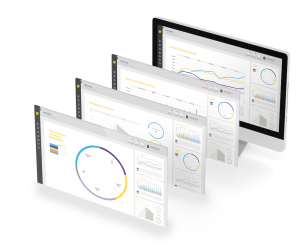
The Payslip platform enables structured and automated data flows across client platforms, In-country providers and post-payroll systems for GL reporting, benefits & other feeds. Our Automated Workflow Engine accommodates high volume data feeds between local vendors and global systems in a way that builds global payroll process scalability and flexibility.
Automated delivery allows global employers to eliminate repeatable manual data handling, inputting, and validating. Automating these recurring and predictable flows frees up global payroll professionals to use their expertise to deliver insights and contribute more to the business growth.
Payslip automates data workflows end to end, captures, automates and protects the data in its original and changing form, delivering single view tracking of data transformation from inputs to outputs and visibility of how it changed, who changed it and what's driving the costs.
Global payroll integration & automation software is meeting a key need in the market for global employers who are keen to find an intelligent solution that helps them manage increasing levels of complexity.
Talk to our team today for more information on how you can introduce automation into your global payroll process.