
Last week, we ran our first webinar after a break during the summer-the topic was on selecting and building a reliable network of local country vendors and how the management of these vendors can put you firmly on the road to execution excellence in global payroll delivery and management. You can view a recording here.
Mary Holland (CPP), CCO hosted the webinar and was joined by Travis Saville, HR Systems Director from our client Wave.

Global payroll remains local. Local expertise is always needed.
This was a timely webinar, happening just a week or two after Gartner released their 2022 multi-country global payroll report. A key finding in this report was the recognition that global employers now use two or more payroll models when they have employees based in 10 or more countries.
This means that a lot of large multinational companies will need to source and connect to local country payroll providers. Global payroll is essentially local, and you cannot do without local expertise because of the local nuances and how they differ in each country.
So, if you happen to be in a lot of countries or have future plans that will see you scaling into a lot of countries- selecting and building a reliable network of local country vendors is going to be an important part of your payroll delivery and management process.
The main thrust of the Gartner point on vendor management was around a recognition that the industry is moving away from the concept of consolidating or reducing your number of vendors-because there is no single global payroll service solution. Instead, it is more about choosing the right number of vendors that are suitable for your payroll delivery model and your payroll needs, and then finding a global framework in which to manage them all. Every country is different, so every payroll is different, so why would anybody expect a payroll provider in Europe to be able to deliver payroll in South America?
Once you accept that it is not about the number of vendors but more about the way you consolidate the data and manage them, then you stop looking for a mythical “single payroll services solution” and start thinking about a global management solution-one that involves consolidating all of the vendors you choose to work within a single location.
“When setting up providers, have a checklist covering all items related to payroll in the new country, so you can see how you are going to manage all of the pieces. This will help you onboard quickly” - Mary Holland (CPP). CCO Payslip
Poll result-57% use peer group networking when selecting an ICP
This was a revealing statistic from a poll question asking webinar attendees about their approach to sourcing a local country provider. Interestingly, there is no go to place or best practice approach-the majority admitted that they reach out to their professional peer network and ask for advice, especially if they know a member of this network processes payroll in the country that they may be moving into.
This is a natural and understandable approach, but it also points to a lack of information about the available options out there. There is a lot of uncertainty and global payroll professionals are not fully sure about the best way to go about selecting and building a network of local country payroll providers.
Mary observed that a really strong approach is to ensure that you maintain full choice and control over your providers, so that you are always in a position to swap out and change providers where necessary. You also want to be in a position where you can quickly add new providers as you scale up and grow. Such an approach is best suited to a global payroll control platform-you want a payroll technology solution that is vendor agnostic.
The aggregator services model limits and restricts you to the number of vendors within their network, meaning you are unable to make changes when you are unsatisfied with the service levels. Plus you surrender direct contact with the local provider as that communication stream is handled by an account manager within the aggregator company-understandably, this does not lend itself to easy and fast payroll query resolution. Another poll we ran during the webinar revealed that 60% of participants felt that being restricted to the local vendors inside their aggregator’s network was in fact their biggest ICP challenge.
So, part of the selection process has to be about long-term visibility and control-the ability to access, view and manage a range of different local country providers, then swap out and change as needed. This way you stay in control of your providers, you communicate with them whenever you want to, you monitor their performance and SLAs and also enjoy full visibility of what is happening across all of your payroll countries.
Start your search early
Travis can speak from experience as, with the help of Payslip, he onboarded a lot of countries in a short period of time-some of these were vendors in very challenging locations like Africa.
So, his advice when it comes to selecting and building a network of local vendors is to start the process early and get really clear about what you want and need from your global payroll. If you leave it too late, you are likely to face a lot of challenges which can make the whole process seem a bit overwhelming.
Travis spoke about how registrations and the whole set up of payroll and paperwork can take a bit of time and is something you really don't want to rush. Challenges you encounter as you enter new countries include documentation being in local country language only.
“Payslip solved the data and reporting limitations we were having with previous vendor models- we could utilize their technology to collect data and leverage the work of our talented local country providers” - Travis Saville, Wave
He also spoke about having regular meetings with local country vendors before entering into a contract so that you can really get a feel for the services available, their level of customer support, query resolution times as well as their ability to understand your specific local country payroll requirements. This is about quality service levels, strong reputation and a certain amount of instinct-a feeling that this is the right provider for your specific needs.
Travis also highlighted the need for flexibility in terms of the payroll model you choose to operate-sometimes change is required, and if you are unable to swap out and change a vendor or if the onboarding process takes months and months, this can be a very unsatisfactory situation and is something that you should try to avoid if at all possible. Getting clear on what you want, starting the process early and asking the right questions can really pay dividends in the long run.
A more sophisticated solution
Travis also spoke of the need for a sophisticated technology solution that could really deliver on the specific needs that Wave had. In the past, they had engaged with and worked with the one-size-fits-all model of a big accountancy firm but found that the results were not as they had hoped.
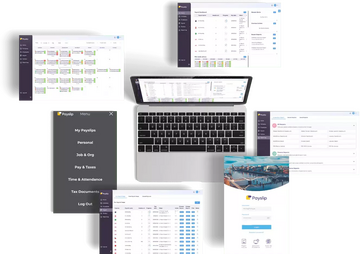
Wave really valued local country relationships and wanted strong communication flows to always be in place. They wanted choice, visibility and control when it came to vendor selection and management. Wave felt that Payslip better understood the operations side of payroll data flows and I CP management. Payslip understood that what Wave needed was vendor management but also the data from all of the vendors consolidated in a single location in a way that supported this data being transformed into helpful global payroll reporting and analytics.
The platform enabled Wave to see and manage what was happening across all of their vendors and all of their countries. They could view all of the data in a single place and then run a variety of different reports that could provide key intelligence and insight on payroll costs. They could also run some helpful and insightful reports on the performance of their various vendors when it came to meeting deliverables and service level expectations.
“With standardized data- we hit 8 new markets in less than 6 months- Payslip became our playbook for launching payroll into new markets- they were our template” - Travis Saville, Wave
Travis mentioned that Payslip took things to another level with the standardization of general ledger mapping codes, which was a huge help to the finance team at Wave, who can now gain instant self-serve access to General Ledger reporting every pay period.
Payslip also helped the local country providers, especially in Africa, understand the process and how the platform was also beneficial to them. The vendors still processed the payroll, while Payslip essentially looked after consolidating all of the data. Payslip can take a lot of data work away from the ICP and makes their life easier- they can focus purely on payroll.
Do you need assistance selecting and managing a network of local country vendors. Perhaps you are with an Aggregator but also have a range of countries not serviced by the Aggregator or you may even be thinking about changing your entire approach to multi country payroll. Talk to our team today and take a platform tour to find out how the global payroll control platform is perfect for managing multiple local country providers.