

The delivery and management of multicountry payroll at multinational organizations in 2023 needs to operate in a number of specific ways in order to be agile, responsive and high functioning.
Global payroll is detailed, complex and nuanced- there are a lot of moving parts-and the entire process requires both a management framework and innovative technology to ensure it runs smoothly and efficiently.
In this article, we are going to look at 6 specific features that indicate your global payroll system is innovative and ready to handle all of the challenges and complexities that come with day-to-day global payroll delivery and management.
Automation
A huge part of the payroll delivery process is the data workflows- especially the pre payroll data flows as this is often the part of the payroll that takes the most time and is most at risk of human error. Leveraging hyper-automation technology is the best way to speed up this time-consuming process and improve accuracy at the same time. Process automation replaces manual data entry in Excel spreadsheets, saving hours and even days as it eliminates the manual back and forth transfer of payroll data.
For the best results, it is best to automate the entire end-to-end process of payroll delivery-when you automate pre-payroll through to post-payroll, you create massive time savings and productivity gains in every payrun.
Standardization
One major challenge and source of frustration in payroll teams around the world is the lack of standardization in both payroll data and payroll processes. The complex nature of international payroll has resulted in multiple data flows coming from multiple different systems. The result of all of this is that global payroll professionals are forced to work with different data flows in different formats- also, payroll teams in different countries operate to a different process making it impossible to get a global view or manage things on a global level.
Standardizing data and processes across countries would introduce a single way of working across all payroll countries. The data flows and formats would be identical and the global payroll professionals would be operating to very similar processes.
In this situation, you can have much better reporting as the data is standardized and you have much greater operational control as the process is the same in all payroll countries. This enables global payroll managers to apply a global management framework to multi-country payroll.
Cloud-based global payroll
Global payroll is too complex and too broad in nature to be processed and managed in Excel spreadsheets and emails. This decades-old method is no longer fit for purpose and is certainly not a sustainable global payroll solution in the post-covid working environment which features a complex mix of hybrid and remote working in the global workforce.
Cloud-based SaaS technology is required for the efficient delivery and management of payroll across multiple countries. It is also needed for security and compliance in the payroll department -global payroll data is quite sensitive and needs to be managed inside a secure cloud environment.
Cloud-based digital tools such as dashboards, system alerts and notifications, communication tools and reporting are also needed to optimize the operational process and ensure that both global payroll team members and managers have a clear line of sight on everything that is happening across all of their payroll countries.
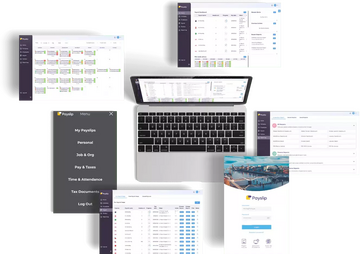
Moving into a modern, cloud-based infrastructure is the only way to effectively deliver and manage payroll today. A global payroll control platform is the ideal SaaS technology you should be using for processing payroll with visibility & control.
Integrated global payroll ecosystem
Global payroll cannot exist in isolation-it will always have important and related data flows with human resources, finance, benefits and local country payroll providers (at Workday Rising it was revealed that the average number of payroll vendors in use is between 3 and 20). All of these systems needed to be integrated so that there are bi-directional data flows between them and there is no unnecessary time-consuming duplication of data.
Payroll software needs to be fully integrated with HCMS like SuccessFactors and Workday - as well as any related financial software and accounting systems. Integrations enable global payroll teams to manage and control their entire global payroll operations, resources, data, and vendors.
Integrations are also needed if you have no appetite for a rip-and-replace global payroll project- it is a far better solution to integrate your payroll system with all related functional data flows and dependencies. This way, you get to keep what is currently working for you ( such as your positive relationships with local country payroll providers) and improve it via rapid and seamless integration data flows.
Comprehensive Reporting
In a post-covid working environment, there is a greater need for data-driven informed decision-making. Global payroll is often an organization's largest expense and leadership teams now require detailed, comprehensive and globally consolidated payroll reporting for a clear line of sight on what is happening with their largest expense.
A key feature of an innovative global payroll system is the ability to rapidly deliver this kind of detailed and nuanced global payroll reporting. Your payroll process needs to deliver essential and comprehensive global payroll reporting at the touch of a button ideally. Leadership teams require complete data-driven observability into all payroll elements for fully informed decision-making.
Payroll managers also need to view, understand and compare payroll costs, trends and variances across all payroll countries. They want real-time and self-service access to consolidated pay and cost data, along with analytical insights. Reporting is also needed to manage and confirm compliance obligations as well as data privacy regulations.
A global management plan
Paying thousands of employees who are scattered across multiple countries and continents also requires a payroll management plan that is global in nature. It is a common misstep at multinational organizations to develop a process for paying employees accurately and on time but not consider how to manage it all on a global level.
Global payroll is complex and requires a mix of payroll services models and local country providers (because payroll is always local too) to make it work. Attempting to run payroll and manage it on a country-by-country basis is not advisable as it will not give you the global view and will only answer country-specific questions.
An innovative global payroll system is one in which local country nuance can be accommodated inside a global management framework-this is about delivering local flexibility within global standardization. A global management plan is a plan that leverages a technology platform to tie all of the key players in the payroll ecosystem together in one location. This means managing local country payroll providers and service models in a platform that is fully integrated with the wider ecosystem. This way, you get all of the data that you need from all of the sources related to payroll, and then extract this data for reporting, analysis and decision-making.
Long-term success in the payroll services space cannot be achieved without this global framework/ management system along with the payroll technology platform to underpin the delivery of this management.
For more information about our Global Payroll Control Platform contact us today.